Which Commercial Dehumidifiers Work Best for Industrial Environments?
Moisture is one of the most stubborn problems in industrial facilities. Excess humidity corrodes metal equipment, warps wood flooring, breeds mold on walls, and can ground an entire operation if left unchecked. If you’ve ever walked into a warehouse on a muggy summer morning and felt that thick, damp air, you already know how fast it becomes a real problem.
Matching the right technology to the right conditions is what separates a working dehumidification system from one that just costs money to run. This article covers the three main dehumidifier types suited for industrial use, the specs that actually matter when you’re buying, and how to size and position units for maximum performance.
Types of Commercial Dehumidifiers That Work in Industrial Settings
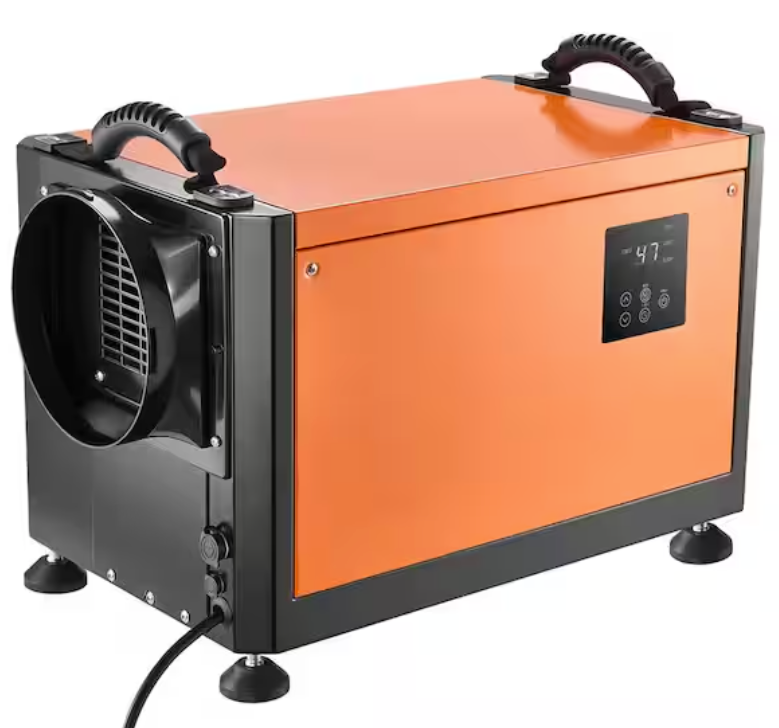
Many facility managers seek versatile solutions to address moisture issues effectively. A portable commercial dehumidifier gives facility managers the flexibility to target moisture where it appears, without committing to permanent ductwork or fixed installations. That matters a lot in warehouses, crawl spaces, and production floors where humidity problems shift with the seasons.
Refrigerant (Compressor-Based) Units
Refrigerant dehumidifiers pull air over a cold coil, condense moisture out of it, and discharge drier air back into the space. They work best when temperatures stay above 60°F (15°C), which covers most standard warehouses and manufacturing plants. Commercial-grade refrigerant units typically extract between 70 to 200 pints per day, and they’re cheaper to operate than most alternatives. But here’s the catch: once you drop below 60°F, performance falls off fast, and the coils can ice over entirely.
Desiccant Dehumidifiers
These units work differently. Air passes through a rotating wheel coated in silica gel or lithium chloride. Since the desiccant material absorbs moisture directly, temperature barely affects the extraction rate. They’re the right choice for cold storage facilities, blast freezer antechambers, and outdoor-adjacent spaces that see sub-50°F conditions regularly. They’ll drain your electric bill faster than refrigerant models, yet they can reach humidity levels as low as 1% RH, something refrigerant units simply can’t do.
Whole-Building Dehumidification Systems
Large industrial facilities, food processing plants, and pharmaceutical spaces sometimes need dehumidification tied directly into the HVAC system. Outside air gets pulled through a central conditioning unit before it circulates through the building. Installation is expensive and requires professional commissioning, but you get thousands of square feet covered with a single system; humidity can be controlled room by room through a building automation system.
Specs That Separate Good Industrial Dehumidifiers from Mediocre Ones
Not every commercial dehumidifier sold in 2026 is actually built for hard industrial use. The word “commercial” gets stretched to cover everything from gym locker rooms to crawl spaces, so reading the spec sheet closely matters.
Extraction Rate and Grain Depression
Extraction rate (pints per day) is where most people start, but it doesn’t reveal the whole picture. The number you see is usually measured at 80°F and 60% RH, a comfortable lab condition. In a real facility running at 90°F and 80% RH, output can run 30-40% higher. Grain depression, meaning the difference in moisture content between inlet and outlet air, gives you a more honest performance metric in demanding industrial environments.
Drain and Pump Configuration
Without a continuous drain option, you’ve got a problem in industrial settings. Manually emptying a tank every few hours isn’t realistic on a production floor. Hunt for units with a gravity drain port (3/4-inch hose fitting is standard), and ideally a built-in condensate pump that can lift water 15 to 20 feet vertically to reach a floor drain or utility sink. Auto-restart after a power outage is another spec worth having if your facility deals with unstable power.
Housing and Durability Ratings
Industrial spaces are rough on equipment. A dehumidifier living in a warehouse or crawl space gets hit with dust, debris, and temperature swings constantly. Powder-coated steel housing survives far longer than plastic shells. An IP (Ingress Protection) rating of IP54 or higher resists dust and water splashes, worth the extra cost if the machine will sit near a loading dock or outdoor-adjacent area.
How to Size and Position Commercial Dehumidifiers Correctly
Buying the right dehumidifier type and then placing it incorrectly is one of the most common and expensive mistakes facility managers make. Your target humidity level depends on the sizing and placement working together.
Calculating the Right Capacity for Your Space
Begin with square footage, but factor in ceiling height. Standard residential math breaks down at ceiling heights above 10 feet, so multiply length × width × height to get cubic footage instead. Then account for the moisture load: open loading docks, wet processes, large numbers of workers, and fresh-air infiltration all add to it. A 50,000 cubic foot dry warehouse might need 150 pints per day; that same space used for produce storage could need 300+ pints per day.
Placement Rules That Actually Move the Needle
Position units near the main moisture source rather than in the center of the room. Air return and discharge should have at least 18 inches of clearance on all sides; this is non-negotiable. And in spaces longer than 100 feet, two smaller units placed at opposite ends outperform one large unit in the middle. Concrete floors pull cold air down, so units mounted or raised slightly off the floor draw from a more representative air sample.
Conclusion
Refrigerant units win on cost and practicality in warm, standard warehouses; desiccant units are non-negotiable for cold or very dry target environments; whole-building systems make sense only at true industrial scale. Beyond unit type, examine grain depression, continuous drain capability, and housing durability before you buy. Size by cubic footage and moisture load, not just floor area, and place units near the source. Get those decisions right, and figuring out which commercial dehumidifiers work best for industrial environments stops being a guessing game.

Stay updated with our latest publications.
Discover Issues
See how we can help you grow in the online space!
Advertise With Us
We can help promote your business.
Find Out More