What It Means to be Educated in the Age Of Information

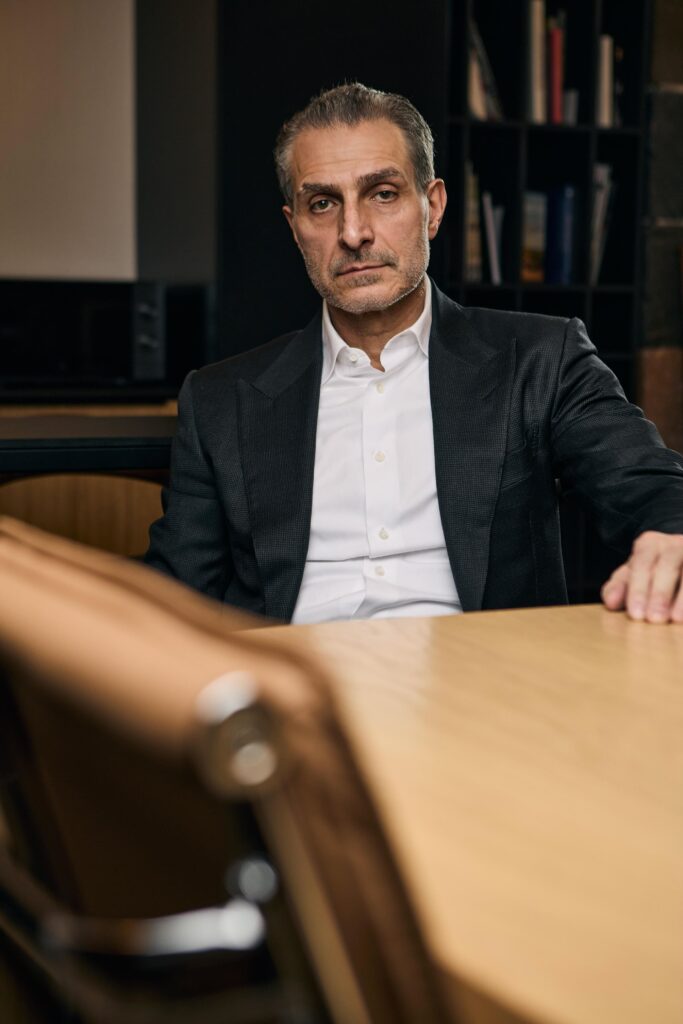
By Vazgen Gevorkyan, a distinguished industrialist, visionary financier, and pioneering technologist, known for his unique intersection of real-world asset development, financial innovation, and technological transformation.
Vazgen Gevorkyan explores what it means to be truly educated in a world flooded with information, and why depth, discipline, and applied knowledge matter more than prestige.
We have never had access to so much information. Our devices hold more data than entire libraries once held. AI can now generate answers to complex questions in seconds, making it hard to distinguish between genuine mastery and prompted pretence.
However, having a plethora of information at our fingertips does not equal understanding. A challenge we all face in today’s oversaturated world is how to make sense of that information, filter it, and apply it responsibly. That is the true measure of what it means to be educated.
True education, in the form of wisdom, can come from anywhere. Some of the most valuable lessons I ever received came from the folk stories my father told me. The lessons he taught me were as powerful as anything I learned at university. Education happens both in classrooms and ‘in the wild’ – from the places that shaped us. The less we wait for someone else’s evaluation, the more freedom we gain to choose what comes next and how we grow.
My desire to further my education, through my postgraduate studies, was not to gather accolades or to add a title to my name. It was because I wanted to increase my understanding. My doctoral research on resource-conservation management may have seemed unconventional, but it shaped my later work. Higher education is not about platitudes or prestige. It is about advancing your understanding so that you can make better decisions in the real world.
Formal education, even from the most prestigious universities, does not guarantee clarity about the future. I was not entirely sure what I wanted to do with my life at 25. Doubt can be unsettling, but it also can act as a helpful tool. Doubt forces you to question, to invest in learning, and to avoid being pigeonholed into narrow definitions of success. The real world requires more than academic knowledge. It requires resilience and the ability to understand your own behavior. What you internalize becomes your edge. It’s not the diploma that defines you, but the discipline to turn knowledge into insight. Running a hospitality business, for example, taught me the importance of observation.
Reading a guest’s mood or unspoken expectations can be a form of education too. It teaches you to notice details, respond quickly, and create value in real time. It also keeps you alert. When you stay curious about what’s happening around you, you make better decisions.
There is also a marked difference between corporate and entrepreneurial thinking. Corporate structures often teach people how to manage risk within fixed boundaries. Entrepreneurship requires a different approach. Entrepreneurship embraces uncertainty and makes room for freedom. Both approaches have their place. It is crucial to know the difference and to apply that understanding in real projects where different talents must work together.
The practicalities of leadership often differ to what is taught in a formal education setting because leadership is about more than charisma or inspiration. It requires people to lean into responsibilities, to be disciplined, and to be persistent. It is about lifting others up, thinking with clarity under pressure, and being accountable when things go wrong. For me, hard work comes naturally. But it has never been about work alone. I work to maintain curiosity, protect decency, and build systems that last. These are the qualities I try to pass on when working with up and coming entrepreneurs.
We live in an Information Age. What defines a well educated person is the ability to use that information wisely and to share it with others.
True education is not about gathering accolades. It is about building a habit of continuous learning, advancing your understanding, and applying that depth with judgment. It prepares us to make better choices, build stronger systems, and contribute to a future that is more thoughtful than the present.

Stay updated with our latest publications.
Discover Issues
See how we can help you grow in the online space!
Advertise With Us
We can help promote your business.
Find Out More