What Workplace Conflict is Really Telling Your Board

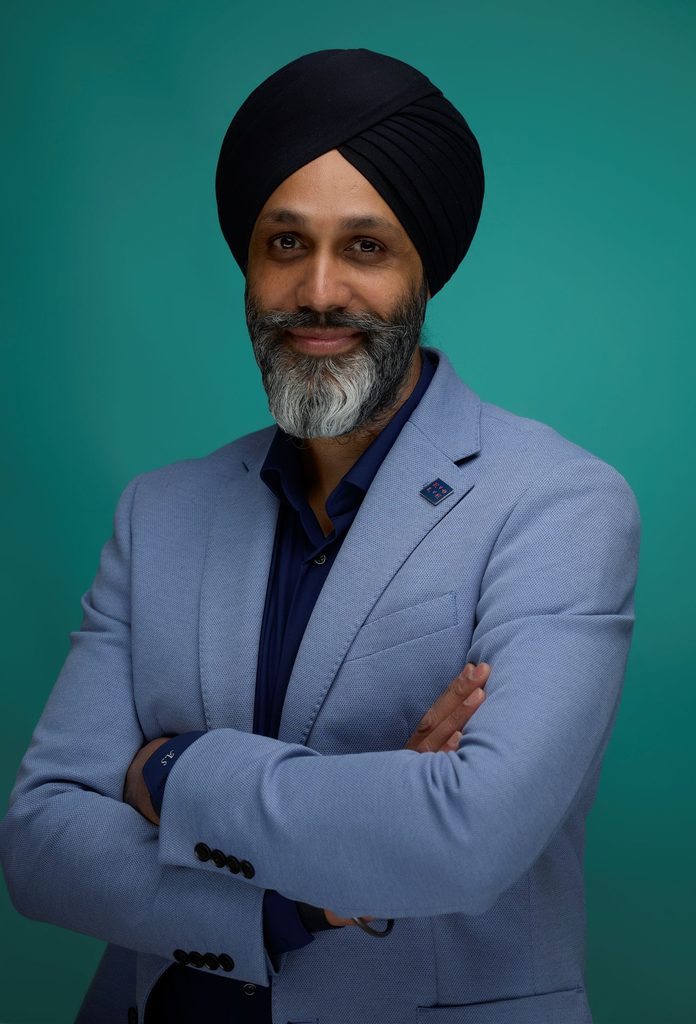
By Amrit Sandhar, Founder and CEO, &Evolve
According to Acas, 44% of working-age adults in Great Britain experienced conflict at work in the past 12 months, the highest level ever recorded in a British worker survey. Of those, 57% experienced stress, anxiety or depression as a result, and 49% reported a drop in motivation or commitment. When Acas last put a price on workplace conflict, it estimated the annual cost to UK organisations at £28.5 billion, more than £1,000 for every employee, and that figure was based on pre-pandemic data. Acas is now updating it.
The numbers are significant, but the more important question for boards is not what conflict costs. It is what conflict is telling them.
Conflict has become an accepted feature of working life. When people from different backgrounds, experiences and perspectives come together, disagreement is inevitable, and we have become accustomed to managing conflict when it appears rather than asking what it reveals about the organisation. That is an assumption worth challenging.
The tip of the iceberg
Most boards see conflict through a narrow lens: grievance numbers, tribunal claims, perhaps an exit interview theme. Yet Acas found that only 9% of people experiencing conflict raised a formal grievance or complaint, whilst 19% did nothing at all and 9% simply left the organisation. The conflict a board can see is only a fraction of the conflict that exists.
The rest appears elsewhere: in sickness absence, in discretionary effort that quietly disappears, in people who stop challenging decisions, and in resignations recorded as ‘a better opportunity’. Conflict is therefore an early signal that something in the organisation is not working as it should, long before it shows up in an engagement survey or an attrition report.
Not all conflict is the problem
That does not mean the objective should be an organisation without disagreement. Boards need people who will question assumptions and say when something is wrong. A meta-analysis of 116 studies by de Wit, Greer and Jehn found that relationship conflict consistently harmed group outcomes, whilst task conflict was not inherently harmful, and was more positively related to performance in top management teams and where it stayed separate from the personal.
The problem, then, isn’t disagreement. It is what happens when disagreement about the work becomes disagreement about the person. Acas found that capability and performance was the most common topic of conflict, reported by 38% of those affected, followed by personal disagreements and relationship issues at 33%. Beneath an argument about performance or priorities, there is often a deeper difference in what two people believe matters: pace or rigour, independence or collaboration, achievement or care for others. The argument appears to be about the task. The tension is about what each person believes is important.
We hire for the gap, not the team
Recruitment is usually triggered by a gap, and the urgency is to fill it. Most of the assessment effort goes into whether the candidate can do the job, and increasingly into behaviours and personality. But one question is rarely asked with the same rigour: how will this person interact with the people they are joining?
Conflict requires more than one party, yet in most recruitment processes the candidate is assessed in isolation. We learn how they communicate and make decisions, but what are we comparing that against? The existing team, the manager, the culture, or simply our own idea of what a good candidate looks like?
Why personality isn’t enough
Personality assessments describe traits and tendencies, but Mischel and Shoda’s work showed that behaviour emerges from the interaction between the individual and the situation; the same person can behave very differently depending on what a situation activates in them. Values offer a different lens: they tell us not how someone behaves, but why, and that distinction matters most when people face ambiguity, competing priorities and decisions with no obviously correct answer.
Professor Shalom Schwartz’s theory of basic human values, tested in 82 countries, identifies a common structure of human values across cultures, organised as motivations that sit in tension with one another. Because that structure is universal, the existing team and a prospective candidate can be understood on exactly the same scale, which answers the question most recruitment processes leave open. And it matters: the 2026 Edelman Trust Barometer, surveying almost 34,000 people in 28 countries, found that a third of employees (34%) would rather switch departments than report to a manager whose values differ from their own, a finding Edelman itself files under workplace conflict.
Alignment isn’t sameness
There is an obvious objection. If we start hiring for ‘values alignment’, don’t we risk creating organisations full of people who think like us? Absolutely, if alignment is interpreted as similarity. ‘Culture fit’ has too often become shorthand for ‘people like us’, and Lauren Rivera’s research into elite professional service firms found that shared leisure pursuits and experiences often outweighed concerns about productivity. Fischer and Schwartz found more consensus than disagreement in value priorities across countries, which means nationality and culture are poor predictors of what an individual values. Organisations can therefore pursue values alignment whilst gaining every benefit of a diverse workforce, and arguably reduce the ‘like me’ bias that gut-feel hiring invites.
The goal is not to eliminate difference, but to understand it well enough that it becomes productive rather than personal. What looks like obstruction might be a strong need for certainty and continuity, what looks like recklessness a drive for creativity and independence, and what looks like a lack of empathy an intense focus on achievement. Understanding the motivation doesn’t mean excusing the behaviour, but it gives us a better starting point for the conversation, and that can take much of the heat out of conflict.
What should the board be asking?
The traditional response to conflict is to ask how to resolve it. Boards should also ask what it is telling them. Is it exposing a weakness in leadership, a lack of clarity about priorities, or a team assembled for complementary skills with little understanding of what motivates its people? Or is it healthy disagreement that has been allowed to become personal? Those are very different problems, and they require very different responses.
Conflict at work isn’t always a sign of a broken organisation. Sometimes it is evidence that people care enough to disagree. But when the same tensions keep appearing, when relationships repeatedly fracture, or when people quietly disengage rather than raise their concerns, the conflict becomes information.
We tend to measure conflict by the grievances it generates and what it costs to resolve. The better measure is what it reveals about how well we understand the people we have, and the people we choose to bring in. So before the next grievance report reaches the boardroom, it is worth asking a different question: if conflict is how an organisation talks about what isn’t working, what has yours been trying to tell you?

Stay updated with our latest publications.
Discover Issues
See how we can help you grow in the online space!
Advertise With Us
We can help promote your business.
Find Out More