Legacy Means Choosing Long-Term Outcomes Over Quick Wins
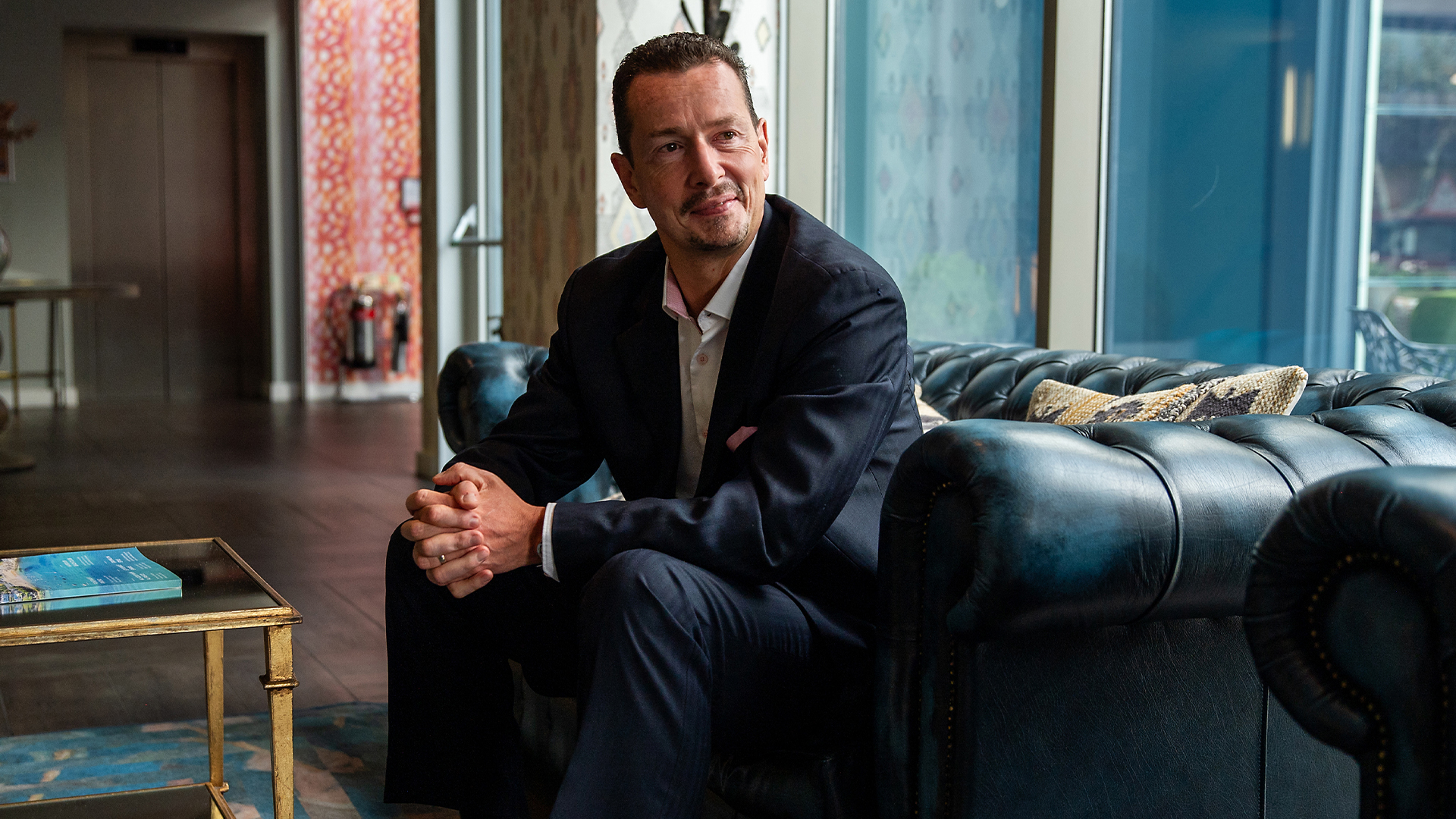
Serge Santos, The Business Physicist
Most businesses do not fail because they grow too slowly. They fail because they optimise for the wrong time horizon. The market rewards immediacy. Share prices react to quarterly guidance, not governance reform. Executives are promoted for acceleration, not restraint. In that environment, long-term thinking can feel like a luxury rather than a discipline.
It’s always tempting in business to gravitate towards visible metrics such as revenue growth, valuations and quarterly results. They provide reassurance, but they only tell part of the story.
Many of the decisions that shape the success of a strong business over time may, such as investments in people, culture and systems, not be obviously visible or measurable. And, of course, short-term success is rewarding and serves a purpose, building confidence and momentum. But a business that chases immediate results at the expense of longer-term thinking can fail to grow resilience and lose its ability to adapt to change.
The Wallenberg family exemplifies the principle of prioritising long-term stewardship over short-term wins. With a motto of esse, non videri (to be, not to be seen) and a track record of sound governance and exceptional philanthropy that already spans five generations, Sweden’s leading business dynasty exerts influence over roughly 35% of the country’s national stock exchange. Its approach has much to teach us about the lasting value of legacy-led leadership.
In practice, legacy means governance structures, capital discipline and succession planning designed to outlast individual leaders.
The hidden cost of short-term thinking
The impact of excessive short-termism is revealed only gradually. Investment gets delayed or cut back in areas that don’t deliver instant return, such as training, research and infrastructure. Excessive growth can outpace a company’s capabilities, putting strain on culture and leadership. What looks like progress in the short term can actually undermine long-term stability beneath the surface.
By contrast, the Wallenbergs have designed ownership and governance structures to insulate their core businesses from short-term shocks such as tax changes and financial crises and to deliver on long-term values. When Sweden’s inheritance duties threatened their holdings, they established foundations that protected their wealth and enabled continuity over generations. The Knut and Alice Wallenberg Foundation, set up in 1917, remains Europe’s second-largest philanthropic donor to universities, giving away roughly $300m annually for research and education.
Research by FCLT Global found that long-term-focused companies invest more consistently in R&D and maintain stronger balance sheets. Companies with a short-term focus significantly underperform in revenue growth, job creation and shareholder value, it found, as compared with their long-term-focused peers.
What legacy-led leadership looks like
Legacy is built through consistent, disciplined decision-making, not kneejerk, attention-grabbing moves. Leaders who focus on the long term invest in systems and culture rather than shortcuts and quick fixes.
The Wallenberg model shows how patient capital and selective ownership in core national champions reinforce long-term value. The family’s portfolio includes Atlas Copco, Saab, Electrolux and Ericsson, companies they’ve held and grown over decades.
Growth needs to be selective and intentional, with owners developing a deep understanding of what strengthens the core. Saying no to opportunities that aren’t aligned with the strategy becomes as important as saying yes, however superficially attractive an offer may seem. This discipline protects focus and prevents dilution of purpose.
Thinking beyond the next quarter
Businesses that endure tend to think in decades rather than quarters. With a clear identity and stable ownership, they can invest for capability without reacting to quarterly volatility. Reputation, trust and relationships are treated as assets to be protected, not exploited.
Rather than seeking quick exits or maximising short-term shareholder value, the Wallenbergs have maintained sizeable stakes in Sweden’s largest businesses through Investor AB, the holding company they control through various foundations. This approach allows portfolio companies to invest in research, development and capability building without the pressure of quarterly earnings calls.
Governance, succession and continuity
Succession is not a future problem. It is a present governance decision. One of the clearest signs of long-term thinking is how seriously a business approaches governance and succession planning. The fifth generation of Wallenbergs, led by Jacob, Peter and Marcus (all now in their mid-to-late 60s), is orchestrating a carefully phased transition to the sixth generation – a group of 30 family members.
Learning from past succession setbacks, the trio are encouraging this group to decide for themselves how best to manage the transition process, guided by a charter drawn up seven years ago setting out the family’s key values and goals. Six members of the coming generation joined Wallenberg organisations this spring, and the current leaders meet three of the 30 successors every six weeks, in rotation.
Legacy-focused leaders build companies that can succeed beyond their own tenure. By distributing and coaching leadership potential in this way rather than placing too much pressure on a single “anointed heir”, the Wallenbergs can grow resilience across generations. Planning early for leadership transition maintains continuity through change, reduces risk and future-proofs success.
Why long-term thinking is rarely applauded
Long-term decisions rarely generate headlines. Governance reforms, capital discipline and investment in capability do not produce instant applause. Their value becomes visible only when crisis exposes weaker models.
The benefits of these decisions are often only seen over time, especially during periods of disruption. In 1877, when economic crisis threatened major borrowers, SEB (the bank founded by André Oscar Wallenberg in 1856) took equity rather than force collapse. In 1916, when new laws made it difficult for banks to hold shares in other companies, Investor AB was founded. These responses to crisis, made without fanfare, laid the groundwork for over a century of influence.
Businesses built with patience might move more slowly, but they’re stronger in times of uncertainty. Over time, the wisdom of decision-making for the longer term emerges.
Redefining legacy
Legacy is not about resisting change or chasing vanity metrics. It is about building structures and culture that outlast individuals and remain adaptable across generations.
By focusing on substance over speed, business owners can build something that is strong enough to evolve without losing its purpose. The real question is not how fast your business is growing, but whether it will still matter when you are no longer there to protect it.

Stay updated with our latest publications.
Discover Issues
See how we can help you grow in the online space!
Advertise With Us
We can help promote your business.
Find Out More