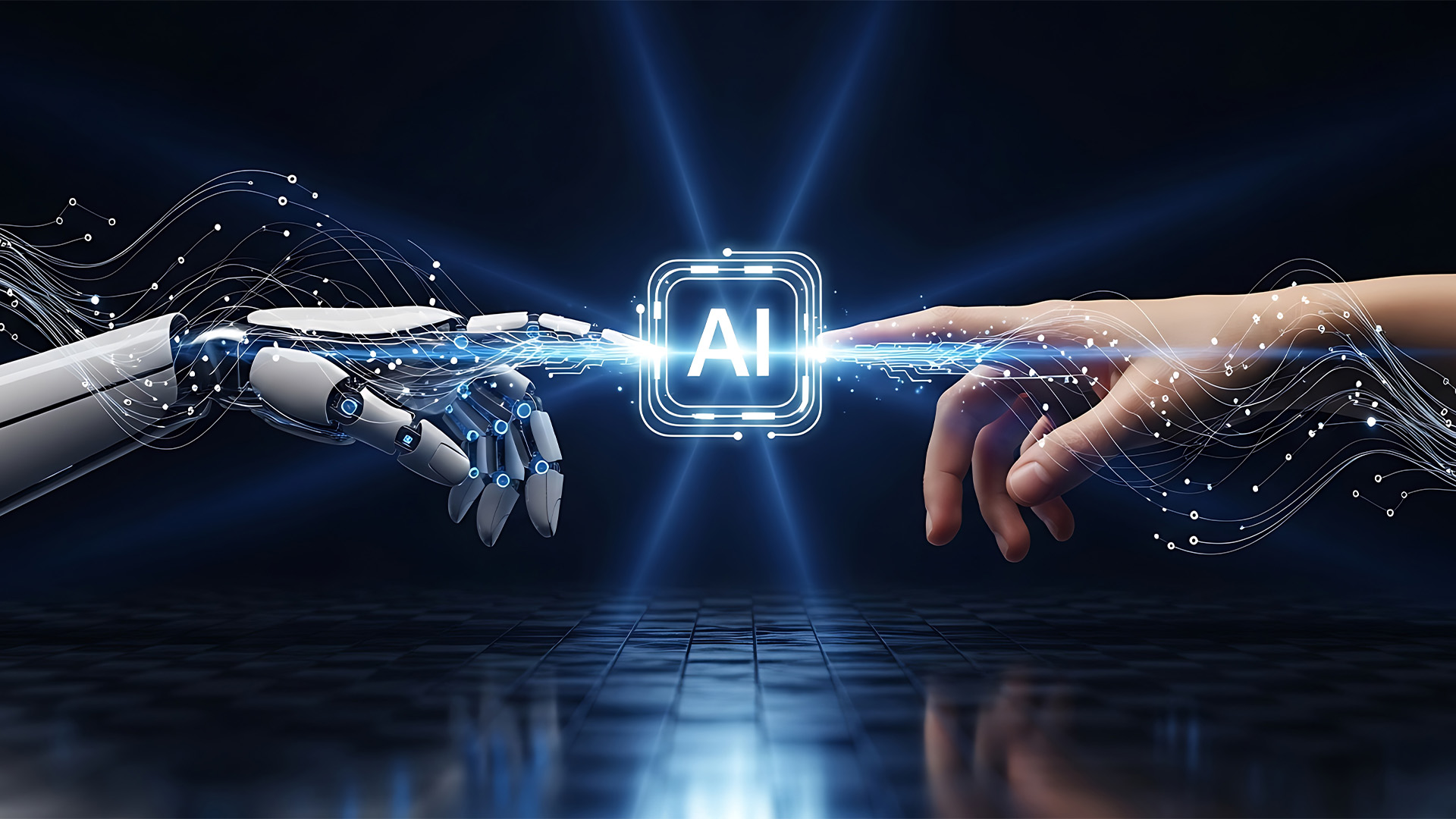
Will AI Replace CEOs? Why Compassionate Leadership Matters
By Ali Brown, Lead Occupational Psychologist & Executive Coach at &Evolve.
Reclaiming the human in the age of machines
Artificial Intelligence (AI) is outperforming humans in speed, accuracy, and adaptability – and businesses are capitalising on this. From retail to logistics to pharmaceuticals, AI makes decisions that were once only reserved for the professionals. What began with digital assistants and specific tools, has evolved into algorithmic management systems and even experimental AI CEOs.
The concept of an AI CEO (an artificial intelligence system serving as Chief Executive Officer) signals a huge transformative shift in leadership. As technologies like deep learning and natural language processing advance, they challenge the notion that strategic vision, ethical judgement, and emotional intelligence are exclusively human traits. Automation is reshaping not only how we work but also who holds the power to decide, connect, and to create. As we rush to automate, it’s imperative to ask – what is the role of the human CEO?
AI CEO systems are increasingly capable of performing functions traditionally associated with human executives. Unlike earlier automation, these systems embody strategic, adaptive, and integrative leadership traits. They focus on long-term vision, competitive strategy, and resource allocation rather than routine tasks. Some engage directly with stakeholders (boards, employees, and customers) through natural language, acting as organisational representatives. In 2022, Chinese gaming company NetDragon Websoft appointed “Tang Yu,” an AI system, as executive director – one of the most prominent examples of AI with formal executive authority.
For years, we found reassurance in the idea that while AI might surpass humans in speed and precision, it could not replicate empathy or ethical reasoning. But that assurance is fast fading. Emerging research shows AI models mimicking aspects of human emotional and moral processes – from brain-inspired “mirror neuron” architectures linking empathy to altruistic motivation, to neural networks making context-sensitive moral judgements. While these systems don’t truly feel empathy or understand ethics, their ability to approximate such behaviours marks a major step toward AI that can reflect emotional intelligence and moral awareness essential to leadership requirements.
Despite these advances, AI remains a simulation of human qualities rather than an actual source of them and it’s not without its hinderances. Its ethical reasoning can be inconsistent and biased, and its empathy, however convincing, is computational rather than emotional. It’s role however, remains assistive rather than autonomous, enhancing decision-making but still dependent on human oversight for intuition, moral discernment, and contextual understanding. And aligning AI with organisational values and ethics is a complex, deeply human task. While it is able to inform executive decisions, it’s only people who can provide the conscience behind them.
Far from signalling the end of the human CEO, this evolution presents an incredible opportunity. As AI takes on data-heavy, time-consuming responsibilities, human leaders can focus on what matters most: their people.
This invites a renaissance of compassionate leadership – the ability to understand and respond to others’ emotional needs. Drawing on Daniel Goleman’s Emotional Intelligence framework, effective leadership depends on five key domains:
- Self-awareness: recognising one’s emotions and their impact
- Self-regulation: managing emotional responses constructively
- Motivation: pursuing goals with resilience and purpose
- Empathy: understanding others’ feelings and perspectives
- Social skills: building relationships, resolving conflict, inspiring teams
These competencies create trust, psychological safety, and inclusion – qualities no algorithm can replicate.
What Do We Truly Value?
We’re told the greatest risk with AI is falling behind. But perhaps the real danger is racing ahead without asking what kind of future we are creating. Is it one where people are valued, connected, and empowered? Or one where efficiency outweighs dignity and productivity replaces meaning? Many companies claim to put their people first, and my challenge to the world is that now is the time to prove it, by taking advantage of this opportunity to redesign the very nature of executive leadership.
Leading with intelligence and compassion
We must stop framing the conversation as human versus machine, given that the future of work depends on humans with machines – in a partnership combining analytical precision and emotional wisdom. The most successful organisations will embrace hybrid leadership models where AI augments human capabilities rather than replaces them.
It’s time to lead with both intelligence and compassion, and to reclaim the human, in the age of machines.

Stay updated with our latest publications.
Discover Issues
See how we can help you grow in the online space!
Advertise With Us
We can help promote your business.
Find Out More