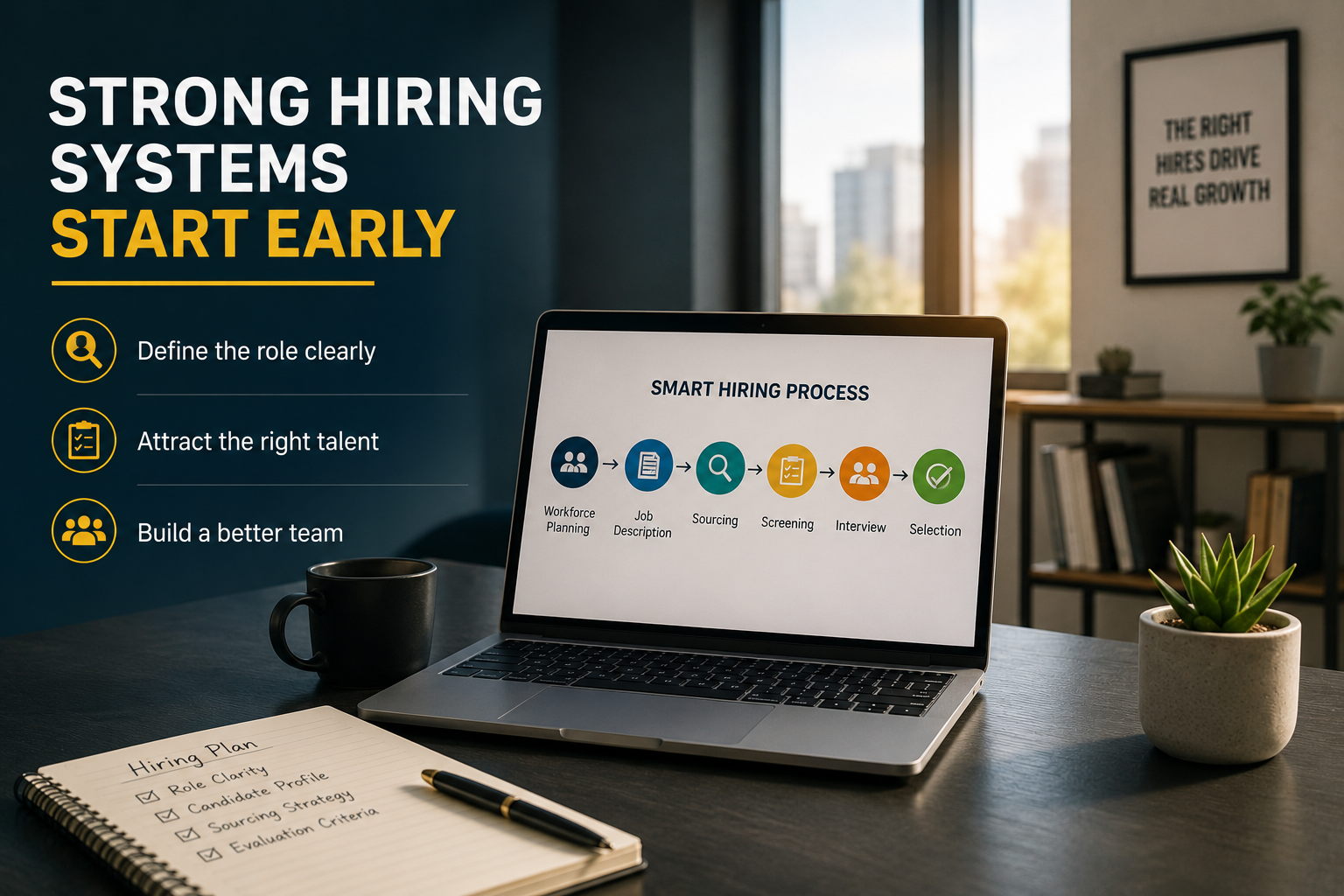
Why Strong Hiring Systems Start Before the Interview Stage
A poor hire rarely begins with a bad interview. More often, the problem starts earlier, when a company has not clearly defined what it needs, how it will judge candidates, or who has the final say. By the time the interview happens, the process is already carrying confusion from the first step.
For CEOs and senior leaders, hiring is not only an HR task. It is one of the most direct ways a business protects its culture, pace, and long-term performance. A good hiring system gives managers confidence before the first conversation with a candidate ever takes place.
The best hiring decisions begin with clarity
Many companies move too quickly from “we need someone” to “let’s start interviewing.” That is where the trouble begins. If the role is vague, the job description is rushed, or the evaluation criteria are unclear, the hiring team will usually make decisions based on instinct rather than structure.
Before interviews begin, leaders should know what the role must achieve in its first six months, which skills are essential, which qualities can be developed, and what kind of evidence they want to see from candidates. Even something as basic as asking applicants to work from a clean resume template can make early screening more consistent, especially when multiple decision-makers are comparing backgrounds, achievements, and experience.
That consistency matters because the first stage of hiring often shapes everything that follows.
A strong process protects everyone’s time
Good candidates can usually sense when a company is organised. They notice whether the role is clear, whether the questions are relevant, and whether the people involved in the process appear aligned. When hiring feels improvised, strong candidates may quietly lose interest.
CEO Review has previously covered the importance of knowing how to hire the right people for the right job, and that principle still holds. A company cannot expect reliable results if every hiring manager is using a different standard.
This is where structure helps. It does not remove human judgment. It simply gives that judgment a better frame. Clear scorecards, defined interview stages, and agreed selection criteria help teams avoid repeating the same conversation three times or chasing a candidate who was never the right fit.
Fairness improves when standards are set early
A structured hiring system also reduces the risk of bias. When interviewers know what they are assessing before they meet the candidate, they are less likely to be swayed by confidence, similarity, or first impressions alone.
LinkedIn’s guidance on hiring processes makes a similar point, noting that strong hiring methods depend on fairness, clarity, and alignment with company goals. For growing businesses, that is not a small detail. It is part of building teams that can scale without constant leadership intervention.
Fairness also benefits candidates. A clear process tells them what to expect and allows them to present their experience properly. That creates a more respectful hiring experience, even for applicants who are not selected.
Leaders should treat hiring as a system, not an event
The interview may be the most visible part of recruitment, but it is not the whole story. Strong hiring begins with preparation: defining the need, shaping the role, standardising the review process, and aligning the people involved.
When companies get those early steps right, interviews become more useful. The questions are sharper. The comparisons are fairer. The final decision is easier to defend.
For CEOs, that is the real value of a strong hiring system. It does not just help the business fill a vacancy. It helps the business make better decisions before pressure, urgency, or personal preference takes over.

Stay updated with our latest publications.
Discover Issues
See how we can help you grow in the online space!
Advertise With Us
We can help promote your business.
Find Out More