Why People, Not Technology, Will Determine the Success of AI-Led Transformation
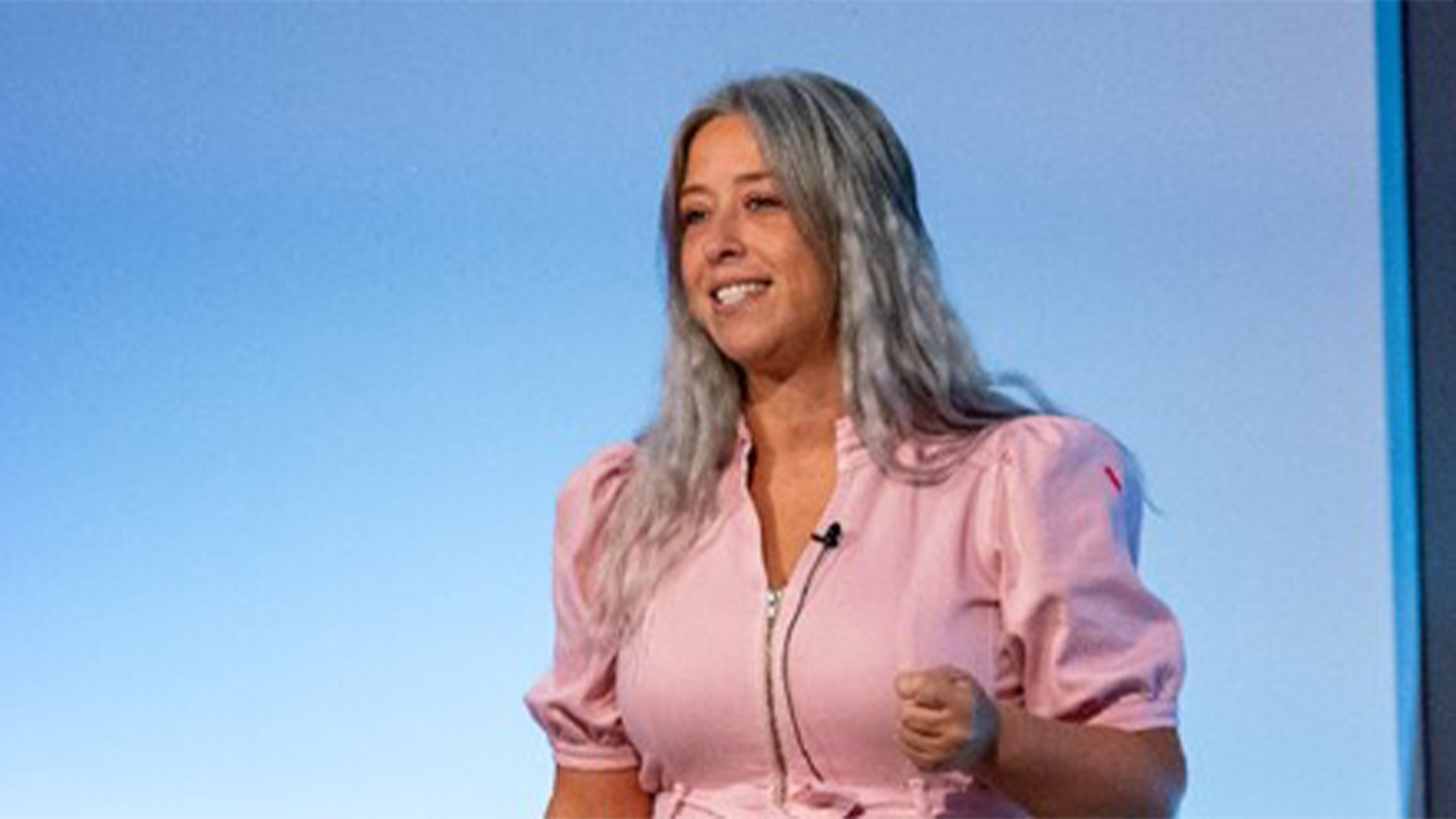
This exclusive interview with Erica Farmer was conducted by Mark Matthews of the Motivational Speakers Agency.
As organisations accelerate their adoption of artificial intelligence, many leaders are discovering that technology is not the primary barrier to transformation. Fear, uncertainty, and a lack of psychological safety continue to slow progress, particularly when AI initiatives are introduced without addressing how people experience change at work.
Erica Farmer is a technology speaker and recognised authority on the human side of digital transformation. Her work focuses on helping leaders navigate AI adoption through trust, capability building, and people-first change strategies. Rather than treating AI as a tools problem, she challenges organisations to confront the cultural, emotional, and leadership realities that determine whether transformation succeeds or stalls.
In this exclusive interview with the SpeakOut Speakers Agency, Erica Farmer explains why misconceptions around AI persist at leadership level, which human skills matter most in an AI-enabled economy, and how CEOs can introduce new technologies in a way that builds confidence, engagement, and long-term value.
Question 1. What is the biggest misconception about AI that is preventing CEOs and senior leaders from driving meaningful adoption across their organisations?
Erica Farmer: “I think it’s about what does AI actually mean and what does it not mean. There’s an AI fear. Whether that’s because, I don’t know, if you’re a geek like me in the 80s you grew up with the Terminator movies, or the Matrix franchise, or even the negative narrative that we see in the media, on the news, on the socials. People kind of suck that up and don’t even realise that it’s kind of affecting their judgement on things.
“It’s about really understanding how can we utilise this technology, but also how can we enable people to be their best selves by doing that. That’s, you know, do I use it in my personal life, do I use it in my professional life, what’s the benefits do I get from it, and what does that mean in terms of how I feel about myself and my role.
“So, in terms of what that means, we’re missing a trick if we don’t go down the human route when it comes to AI and we just go down the tools and technology route. That’s what a lot of organisations seem to be doing.
“Oh, we’ve just rolled out, I don’t know, Microsoft Copilot,” and then they expect everybody to be using Microsoft Copilot in 90 days. Funnily enough, that doesn’t happen.
“Because we haven’t done the hearts and minds thing. We haven’t done the safety thing, the guard rails. How do people feel? Why do they feel that way?
“So if you’re rolling out artificial intelligence, or any kind of change initiative or tools in your organisation, you’ve got to start with the people first. Where I see the gaps in organisations is they haven’t started people first.”
Question 2. Which human capabilities should today’s leaders prioritise developing to ensure their organisations remain competitive in an AI-driven economy?
Erica Farmer: “It’s an interesting one, isn’t it? Because everybody’s talking about artificial intelligence, and you do have a set of skills that come around that in regards to prompting, for example, and quality checking. But actually, the human distinctive skills that you need to collaborate with AI in the right way are things like critical thinking skills.
“How can you stop and say, why are we doing this, and is it the right thing to do, for example, rather than just go away on the automation train? Learning agility. Things are changing so quickly in organisations.
“How do I put down what I’ve always done in my job, whether that’s mindset, skill set, tasks, and how do I learn to do something slightly different, but apply that skill in record time so my organisation can pivot and move in ways to maintain its competitive edge, rather than kind of trying to move a tanker that takes a long time to do it?
“Organisations will rely on their people to be able to pick up new workflows, new products, new services, new languages, whatever it might be, and we’ve got to be okay with that unlearning and that relearning. So for me, critical thinking is number one. Learning agility is number two.”
Question 3. From a leadership and change-management perspective, where should CEOs begin when introducing AI into their organisations?
Erica Farmer: “Not with the AI.
“The amount of clients and prospects that come to me and they’re like, “What tool should we be using? We’re doing a tool-first strategy, a tech-first strategy,” and I’m like, “No, no, no, no, no.”
“That stuff’s going to look different tomorrow anyway because it’s changing so quickly. Already we’ve gone from generative AI to agentic AI, which do two different things.
“But if you don’t engage people’s hearts and minds, if you don’t do the people-first thing, you’re never going to get anywhere. You’re just going to fall over.
“So give people the time and space to think about what does it mean for me? What does it mean for my job? Am I worried about losing my job? Am I worried about implementing new technology into my role? Or is it time just to leave my role and retire, for example? And that’s totally fine as well.
“Hearts and minds, you’ve got to go people first. Give them the time, the headspace, the confidence, as well as the skills and the competence through AI literacy and training and things like that.
“But don’t just go straight into, “Right, you’ve got access to ChatGPT now, off you go,” because people are never going to feel comfortable and psychologically safe to adopt the technology to be the real unlock of transformation that you’re looking for.”
Question 4. What mindset shift do you want senior leaders to take away from your work on AI, leadership, and the future of work?
Erica Farmer: “I want them to be excited about actually getting in there and doing something different. I don’t call myself an inspirational speaker, because who am I to say I’m inspirational? Everybody will be inspired by different ways. It gives me the yick a little bit when I see “inspirational speaker”.
“What I want to be known as is someone who helped people get excited and get engaged. Whether that’s AI, whether that’s the future of work, whether that’s anything I’m kind of just having a conversation about, I want people to go away and say, “I’m going to do something different, because that’s actually really exciting.”

Stay updated with our latest publications.
Discover Issues
See how we can help you grow in the online space!
Advertise With Us
We can help promote your business.
Find Out More