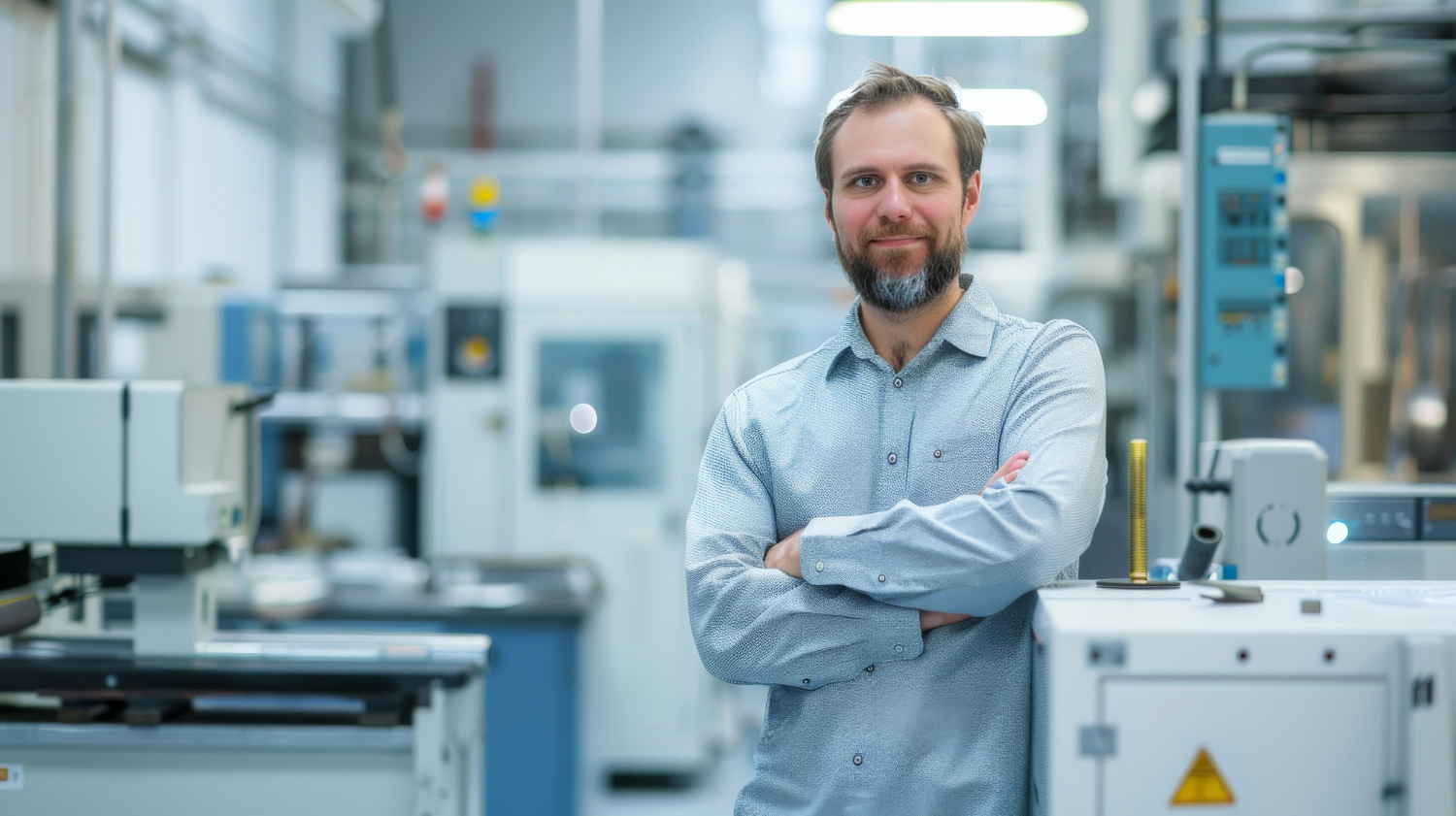
Why CEOs Invest in Rotary Die Cutting Machines to Scale High-Volume Production
Rotary die cutting machines are a strategic investment for CEOs and business leaders overseeing high-volume manufacturing operations. In environments where margins are tight and delivery timelines are non-negotiable, production technology directly influences profitability, scalability, and competitive positioning.
Across industries such as medical manufacturing, automotive supply, electronics, and industrial materials, executives face constant pressure to increase output without proportionally increasing labor, waste, or operational risk. Traditional flatbed cutting methods often become a constraint as volume grows. Rotary die cutting machines enable continuous production, allowing organizations to scale efficiently while maintaining quality and cost control.
As volume increases, even small inefficiencies compound rapidly. Rotary systems are engineered to eliminate those inefficiencies by delivering consistent speed and accuracy over long production runs, helping leadership teams protect margins while meeting market demand.
Scaling Production Capacity Without Scaling Overhead
One of the most significant advantages of rotary die cutting from a leadership perspective is continuous operation. Unlike start-and-stop flatbed processes, rotary systems feed material from rolls through rotating dies, completing cutting, scoring, or laminating in one uninterrupted motion.
This approach dramatically increases throughput, allowing companies to meet higher demand without adding headcount or expanding facilities. For CEOs focused on operational leverage, this results in a lower cost per unit and better utilization of existing capital investments.
Equally important, rotary systems maintain uniform pressure at high speeds, reducing variation and scrap. Over large production volumes, this consistency delivers meaningful material savings and more predictable production costs.
Protecting Brand Reputation Through Consistent Output
At high volumes, inconsistency becomes expensive. Rotary die cutting machines maintain tight tolerances between the die and anvil rollers, ensuring precise and repeatable cut depth across millions of cycles.
This precision is critical for multi-layer products where only specific layers must be cut while others remain intact. Reliable accuracy reduces rework, lowers rejection rates, and minimizes the risk of quality-related disruptions that can damage customer relationships.
For companies operating in regulated or quality-sensitive industries, consistent output also simplifies quality assurance and compliance, reducing operational risk and audit exposure.
Tooling Strategies That Improve Speed to Market
From an executive standpoint, tooling decisions directly impact agility and responsiveness. Rotary dies are typically manufactured from hardened steel and designed for long service life, making them well suited for sustained, high-volume production.
For organizations producing multiple SKUs or responding to frequent design changes, flexible and magnetic dies enable faster changeovers with minimal downtime. This capability supports high-mix, high-volume production models without sacrificing efficiency.
Faster changeovers translate into shorter lead times, improved customer responsiveness, and stronger competitive positioning.
Enabling Growth Across Diverse Revenue Streams
Rotary die cutting machines are used across a wide range of industries, making them a foundational capability for manufacturers serving multiple markets.
In electronics manufacturing, they support the production of thermal pads, light diffusers, insulation layers, and battery components. In medical manufacturing, they are essential for producing bandages, diagnostic components, and wearable medical products where consistency is critical.
Automotive suppliers rely on rotary die cutting for gaskets, sound-dampening materials, interior trim, and adhesive components. In each case, the business value lies in producing complex shapes at scale while maintaining predictable costs and dependable quality.
Reducing Operational Risk Through Predictable Maintenance
From a leadership perspective, downtime represents one of the highest operational risks. While rotary die cutting machines are built for continuous use, maintaining performance requires disciplined maintenance and monitoring.
Regular inspection of dies, bearings, and pressure settings helps prevent quality drift and unexpected stoppages. Many modern systems include automated adjustments that compensate for tool wear, reducing dependence on manual intervention and lowering the likelihood of costly errors.
Preventative maintenance protects not only production output but also expensive raw materials, particularly in multi-layer or specialty material applications.
A Manufacturing Investment That Delivers Long-Term Margin Protection
The long-term business case for rotary die cutting lies in scalability. Once tooling is installed and calibrated, production volume can increase by running faster or longer without proportionally increasing labor, oversight, or operational complexity.
This flexibility allows companies to respond quickly to demand surges, seasonal fluctuations, or new customer opportunities. While the upfront investment in equipment and tooling may be higher, the predictable and low variable cost per unit makes rotary die cutting a strong long-term investment.
For CEOs and business leaders evaluating manufacturing technology, rotary die cutting machines provide a clear path to higher throughput, stronger margins, and sustainable growth at scale.

Stay updated with our latest publications.
Discover Issues
See how we can help you grow in the online space!
Advertise With Us
We can help promote your business.
Find Out More