When Does a Business Need a Multisite CMS
Most companies start with a single website – one domain, one content management system, one team keeping it current. That works fine until the business grows in a particular direction: more brands, more regions, more audiences, more launches. Eventually, one webpage line beneath needs to be turned into never built for, and the company finds itself running numerous websites by brute force – reusing templates, copying content between systems, juggling separate logins and codebases. That is typically while the actual query arrives: will we really need a multisite CMS?
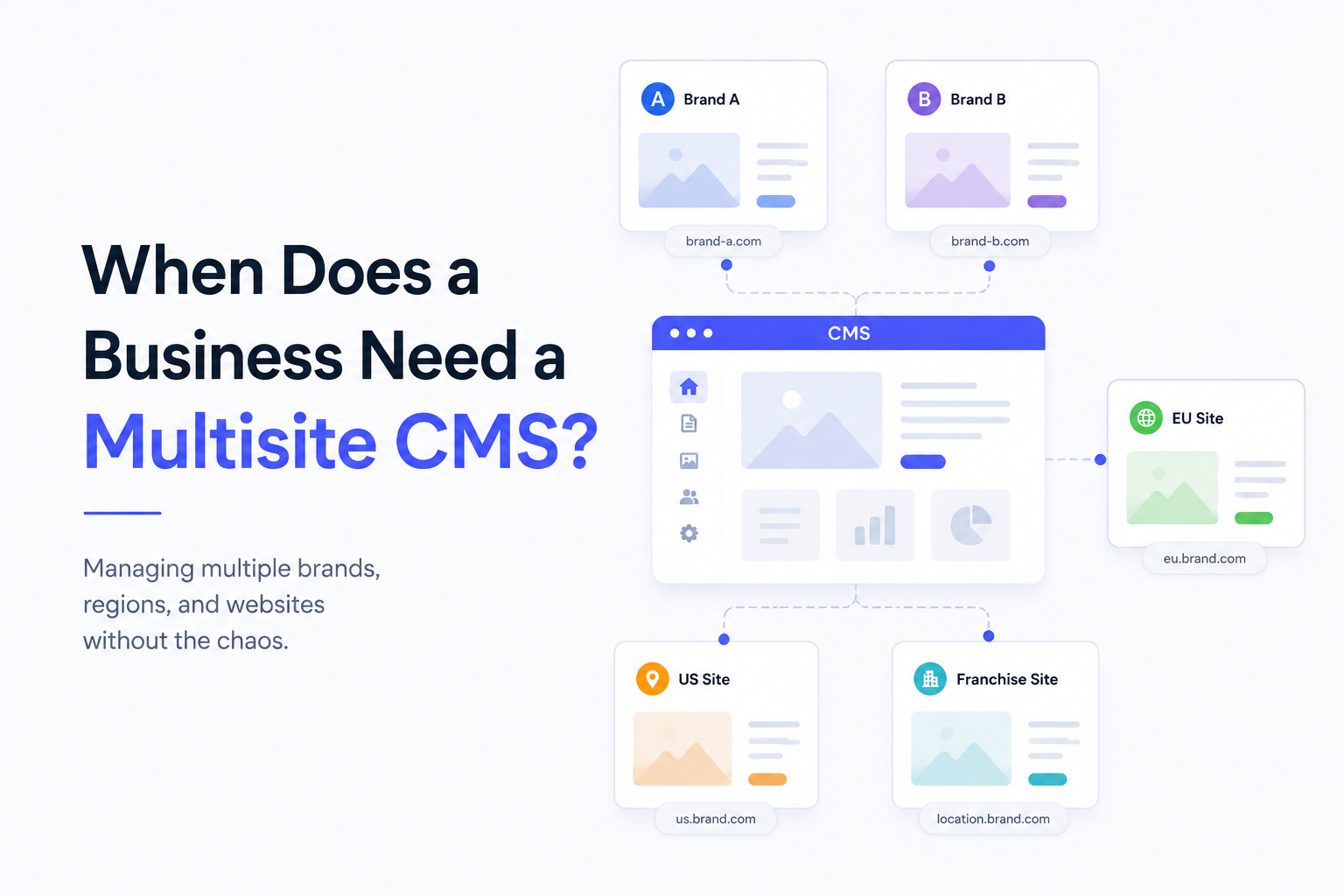
With a multisite setup, we could have an organisation control a couple of websites from a single shared installation. Instead of setting up a separate gadget for each web page, they all run on one platform, percentage not unusual infrastructure, and may reuse content, templates, users, and governance. The sites can still feel distinct, target different audiences, and sit on different domains – they are simply administered together. The real question is not whether multisite is possible, but whether your situation actually requires it. Here are the signs to look for.
You’re managing multiple brands or sub-brands
The most common trigger is a portfolio of brands. A determined company might also own numerous product lines, each with its very own identity, or a conserving company might also additionally control wonderful organisations under one umbrella. Each logo wishes a website with its very own look, voice, and messaging, whilst the corporation behind it nonetheless wishes consistency, control, and speed.
This is where a multisite CMS approach becomes valuable. Running each brand website online on its own separate CMS finally ends up duplicating work throughout the board: separate updates, separate security patches, separate hosting, separate groups gaining knowledge of separate tools. With a multisite setup, we could preserve every brand, preserve a wonderful front face, whilst the underlying platform remains shared. Core updates roll out anywhere at once, branding is less complicated to govern, and the value of launching a brand new brand website online drops sharply, due to the fact that the inspiration already exists.
You operate across regions and languages
International and multi-local companies are a good fit. An agency promoting in a dozen international locations typically desires localised websites: extraordinary languages, currencies, and criminal requirements, plus region-specific content and promotions. Forcing that complexity into one traditional website fast will become a mess, whilst maintaining a dozen completely unbiased websites will become an upkeep burden and a consistency nightmare.
Multisite structure is more organised. A commercial company can run a coordinated community of local websites that proportion international content material, where it makes sense – middle product information, emblem assets, company messaging – whilst local groups regulate and upload what their marketplace desires. Compliance with local rules, together with data-privacy legal guidelines that vary by jurisdiction, is likewise simpler to control when the websites sit within a single internal one ruled by devices as opposed to scattered throughout many separate places.
You launch campaigns or microsites frequently
Some companies spin up websites constantly: marketing campaign touchdown pages, event microsites, product-release pages, seasonal promotions. When advertising time and again asks developers to construct but every other standalone webpage from scratch, the agency wastes money and time reinventing the wheel.
A multisite platform turns the web page introduction right into a repeatable process. New microsites are provisioned fast from shared templates and components, inheriting the emblem`s layout gadget and governance automatically. Marketing profits pace and autonomy, whilst the technical group avoids one-off builds that later end up orphaned, unpatched liabilities.
You have separate divisions, departments, or franchises
Large organisations often have internal units that each want their own web presence – divisions, departments, regional offices, franchise locations. Universities have faculties and departments; agencies have commercial company units; franchise networks could have masses of nearby outlets, each wanting a web page that displays its vicinity while staying on-brand.
Without a shared system, this fragments into inconsistent design, choppy quality, safety gaps, and no primary oversight. A multisite method offers every unit a few independence – their personal content, every so often their personal editors – inside a framework that headquarters controls. Central groups outline the templates, enforce emblem standards, and take care of safety, even as nearby groups control their personal content.
The trade-offs to weigh honestly
Multisite is not automatically the right solution, and choosing it when you do not need it creates its own mess. The architecture is harder to set up and demands more technical expertise than a single-site build. There is also a kind of shared fate: because the sites share infrastructure, a core-level problem – a platform bug, a bad configuration, a performance issue – can hit every site at once, whereas fully independent sites fail on their own and do not spread the damage.
Governance needs real discipline, too. The flexibility that shall we nearby groups to manipulate their personal content can become inconsistent or sprawl if no personnel units establish clear guidelines and permissions. And whilst shared infrastructure saves cash overall, the up-front fee to lay out and construct a stable multisite platform is better than launching one easy web website.
The bottom line
Ultimately, the determining element is the connection among the websites. If they proportion branding, content material, governance, or maybe the same people, or in case you hold rebuilding the same matters over and over, multisite might be the better fit, turning a sprawling, duplicated, hard-to-stable series of websites into something coordinated and governable. If the websites are actually separate worlds with nothing in common, forcing them onto one platform best provides complexity for no actual payoff. The sincere pass is to be counted number what number of websites you really run, ask how much they surely proportion, and determine how much primary manipulation you want. When the solution factors towards many related homes beneath one roof, a multisite CMS stops being a comfort and turns into the muse that makes your complete virtual presence practicable as the organisation grows.

Stay updated with our latest publications.
Discover Issues
See how we can help you grow in the online space!
Advertise With Us
We can help promote your business.
Find Out More