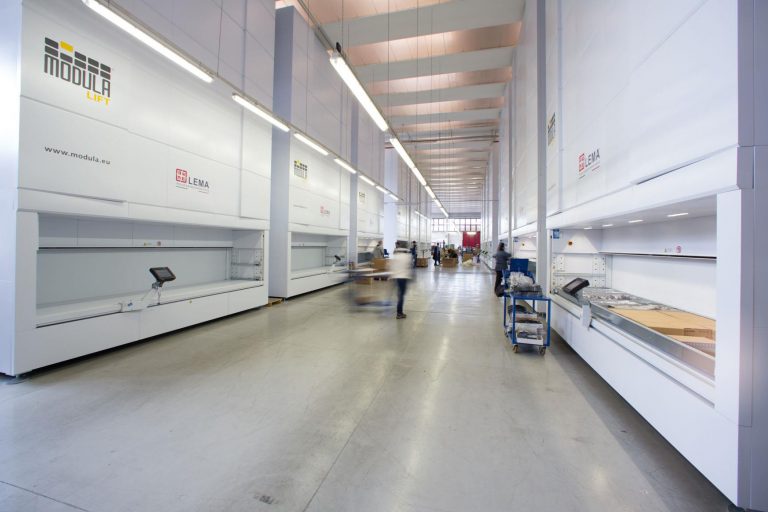
The Role of Modular Storage Systems in Efficient Facility Organisation
Storage problems show up at the worst of times and tend to pull the handbrake on the entire supply chain, which is why more and more teams are rethinking how they store and retrieve materials, starting with modular storage systems that can be arranged around the work.
This article takes a look at where modular storage tends to pay off fastest, and how to plan an organisation upgrade that sticks without turning into an endless project.
Understanding modular storage
A modular setup is built from bays, bins, drawers, shelves, trays, and accessories that share a standard footprint. Instead of a permanent piece of architecture, it is a system you can tune.
Self-storage facilities can face similar layout challenges as space requirements, customer demand, and the types of items being stored change over time. That helps because most facilities are not static. Product lines and teams change, so the perfect shelving layout from last year can become a daily annoyance after one new SKU family shows up in bulk cases, or after a single customer starts ordering in a different mix.
Modular storage works best when you design it around your inventory and workflows. Case packs and item dimensions evolve, and a receiving area can become a kitting area in no time.
When the storage can change with you, you don’t have to rework everything each time the business shifts.
Hidden tax of “good enough”
We all know that disorganisation is annoying, but we can also underestimate how quickly it becomes expensive.
In warehousing research, order picking is consistently described as one of the most labor-intensive steps. Warehousing activities account for about 25% of logistics costs, and order picking can represent around 55% of warehouse operating costs.
When storage is scattered, mislabeled, or designed without a clear home for each item, you usually see the same patterns:
- Search time becomes normalised.
- Workarounds become an unofficial process.
- Errors become an acceptable loss.
Modular storage doesn’t fix every process issue, but it does remove a lot of friction that people mistakenly treat as unavoidable.
Where modular storage makes the biggest difference
You can modularise almost anywhere, but the trick is to start where the work is most sensitive to delay or error.
Picking, knitting, and assembly zones benefit most from predictable placement and a layout that matches how the work flows. If a picker has to zigzag because fast movers are split across multiple locations, that’s a huge waste of time.
Try to group items by how they’re used together, not just by what they are. For example, if you regularly kit brackets and bolts, store them in a single module cluster with clear subdivision inside each drawer or bin.
Maintenance and operations areas
MRO storage is famous for turning into a mystery. The usage is irregular, and the consequences of not finding it can halt a job.
Modular storage helps here because it supports controlled micro-zones, like:
- Electrical supplies
- Pneumatics and fittings
- Tooling and calibration items
- Safety and PPE replenishment
This leads to faster troubleshooting because you can rule things out quickly. Knowing that you’re out of something is a much cleaner, more straightforward answer than knowing it’s “somewhere but who knows where.”
Shared supply rooms
In shared spaces, storage fails because nobody takes ownership. Modular storage makes it easier to assign ownership by category and maintain reorder points without turning the room into a wall of random boxes.
Organisation is more than speed
Warehousing and storage work has a real physical toll. In the U.S. Bureau of Labor Statistics industry data for warehousing and storage, the total recordable cases rate is listed as 4.8 cases per 100 full-time workers, more than double the total work injury and illness rate in private industry overall.
Modular storage can support safety by making it easier to keep heavy items between knee and shoulder height, reduce reaching and bending, and maintain clear aisles and consistent staging zones. You still need training and good equipment, but storage design is part of how you engineer safer behavior into the day.
Measuring whether the upgrade is working
A storage project feels good when it’s new, but the real test is whether it keeps paying off after the novelty wears off.
Pick a handful of metrics you can actually track, such as:
- Time to locate the top 20 items
- Number of “unknown location” incidents
- Mispicks tied to wrong bin selection
- Space reclaimed in aisles or staging zones
- Replenishment misses (items that hit zero unexpectedly)
Inventory distortion represents 6.5% of global retail sales, which shows how costly stockouts and overstocks can become when inventory signals are unreliable.
Even if you’re not a retailer, poor inventory truth has a cost, and storage is one of the places where everything either holds up or collapses.
Bottom line
Modular storage helps you build an environment where the work is easier to do correctly.
When storage is flexible and designed around real workflows, people stop improvising and make fewer avoidable mistakes. They can maintain standards without heroic effort.

Stay updated with our latest publications.
Discover Issues
See how we can help you grow in the online space!
Advertise With Us
We can help promote your business.
Find Out More