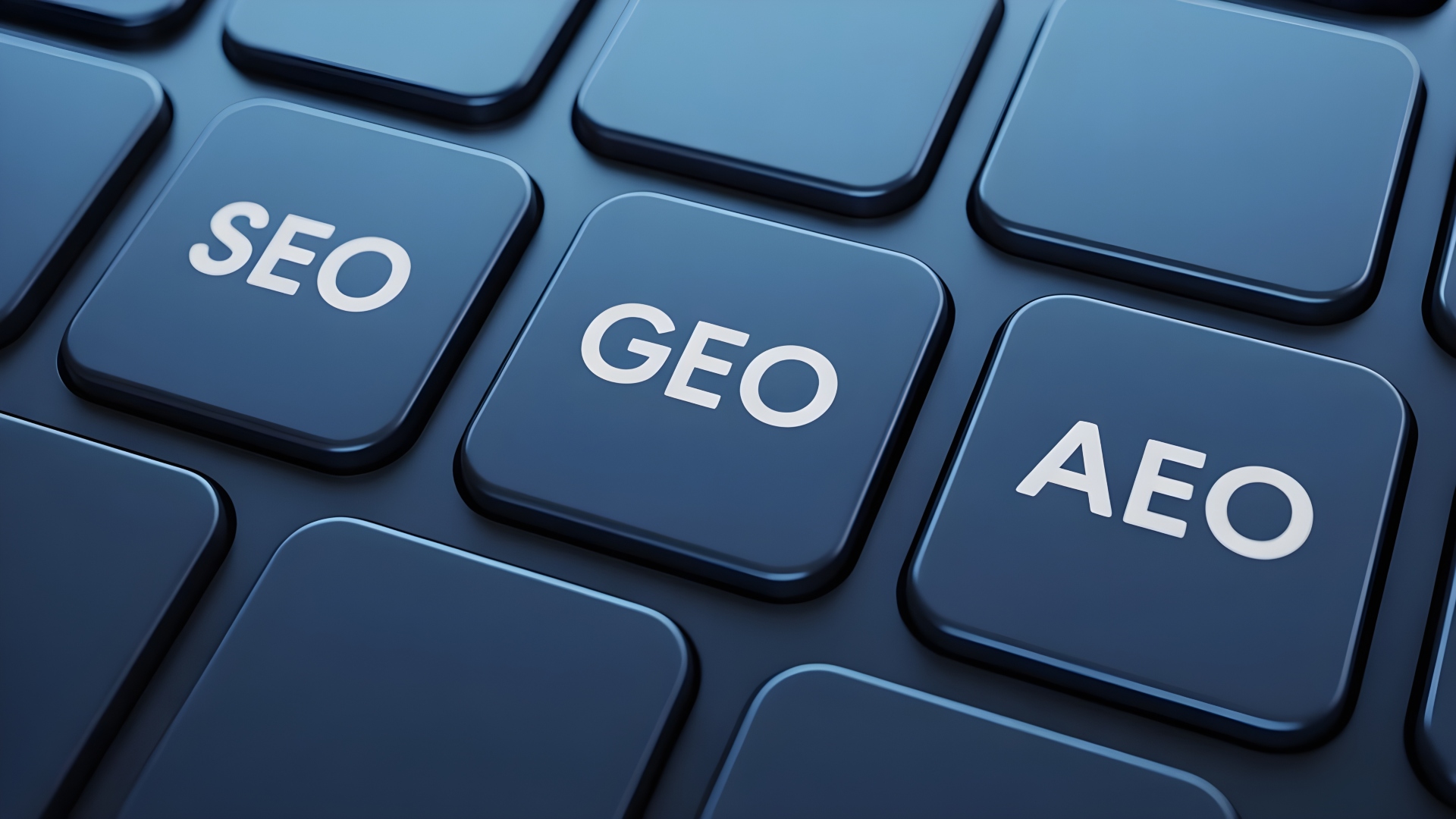
SEO vs. GEO vs. AEO: Navigating the New Era of Search
In recent years, the landscape of organic search has shifted dramatically. It is no longer enough to simply “rank” on a page of blue links. With the rise of AI Overviews and sophisticated Large Language Models (LLMs), new disciplines have emerged: Generative Engine Optimisation (GEO) and Answer Engine Optimisation (AEO).
Understanding how these three strategies overlap—and where they differ—is essential for maintaining visibility in an increasingly AI-driven world.
1. The Core Definitions
SEO (Search Engine Optimisation)
The Foundation. SEO remains the practice of improving your website’s visibility in traditional search engine results (like Google or Bing). It focuses on technical health, keyword relevance, and building authority through backlinks to drive organic traffic directly to your site. Brands that rely on white hat backlink strategies tend to build the most durable authority, since editorially earned links carry weight with both search engines and AI models without exposing the domain to penalty risk.
GEO (Generative Engine Optimisation)
The AI Citations. GEO is the process of optimising your content so that it is cited and synthesised by generative AI platforms, such as ChatGPT, Claude, Gemini, and Perplexity. The goal here is to ensure your brand is the “source” the AI uses when generating an answer for a user. According to Sure Oak, 40% of all new leads now come directly through LLM visibility.
AEO (Answer Engine Optimisation)
The Direct Response. AEO is a specialised branch of both SEO and GEO. It focuses on structuring content so it can be instantly pulled as a direct answer—whether that’s in a Featured Snippet (Position Zero) on Google or a voice search response from Alexa or Siri.
2. Key Differences at a Glance
| Feature | SEO | GEO | AEO |
| Primary Goal | Rank higher in SERPs | Be cited by AI models | Provide the “Instant Answer” |
| Content Style | Comprehensive, long-form | Modular, fact-dense | Concise, Q&A format |
| Format | Articles, landing pages | Lists, tables, citations | FAQs, bullet points |
| Success Metric | Clicks and CTR | Brand mentions in AI | Featured snippets/Voice share |
| Target | Traditional Searchers | Chatbot/LLM Users | Voice/Quick-query Users |
Export to Sheets
3. How the Strategies Intersect
While they have different targets, these three disciplines are intrinsically linked. You cannot have successful AEO or GEO without a strong SEO foundation.
- Shared Intent: All three aim to satisfy the user’s query. Whether a user clicks a link or reads an AI summary, the content must be relevant and helpful.
- Technical Health: A slow or uncrawlable site will fail across all three. If an AI crawler or a search bot cannot access your data, you won’t be indexed or cited.
- Authority (E-E-A-T): Trust is the universal currency. Google and AI models alike prioritises content that demonstrates Experience, Expertise, Authoritativeness, and Trustworthiness.
4. Integration Strategy: A Hybrid Approach
To stay ahead, businesses should adopt a unified approach that treats these not as separate tasks, but as a single, cohesive organic strategy.
Step 1: Secure the SEO Foundation
Ensure your technical SEO is flawless. Use tools to monitor site speed, mobile-friendliness, and crawl errors. Without this, your site won’t be “trusted” enough by AI engines to be used as a source.
Step 2: Optimise for AEO (The “Quick Wins”)
Structure your content to answer questions immediately. Use clear “H2” or “H3” headers that mirror common user questions (e.g., “How do I…?”) and follow them with a concise 40–60 word answer. Implement Schema Markup (specifically FAQ and How-To) to give search engines a clear “map” of your answers.
Step 3: Refine for GEO (Long-term Authority)
AI models prefer modular data. Use tables, numbered lists, and clear citations of original research or statistics. By making your data easy for an AI to “scrape” and attribute, you increase the likelihood of your brand being mentioned in complex, synthesised AI responses.
Summary
The era of “pure” SEO is evolving. By integrating AEO for immediate visibility and GEO for AI-driven authority, you ensure your brand remains visible regardless of how the user chooses to search – whether they are typing into a box, talking to a voice assistant, or conversing with a chatbot.
The goal remains the same: be the most helpful, most authoritative answer on the web. Your local SEO agency will have all of these meanings preloaded and ready to turn into a strategy.

Stay updated with our latest publications.
Discover Issues
See how we can help you grow in the online space!
Advertise With Us
We can help promote your business.
Find Out More