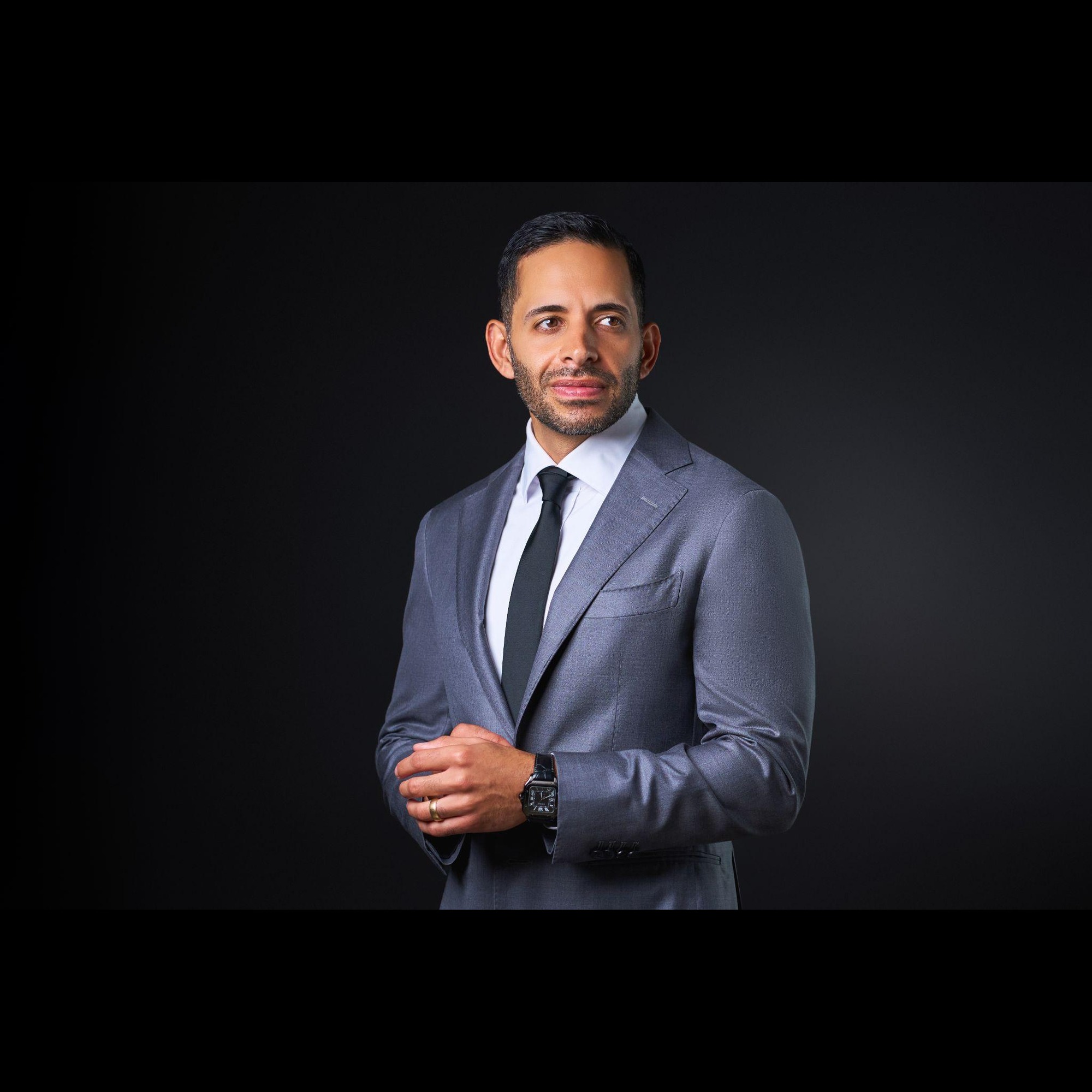
Nicholas Mukhtar on Leadership Scrutiny, and Two Ways to Count CEO Exits
Nicholas Mukhtar’s clients at Tera Strategies, the firm he has led in Fort Lauderdale since 2019, include family offices, corporate executives and business owners. Asked about a shift toward less flash and more substance in leadership expectations, he said: “I’d push back on that framing a bit, because I still see very different types of leaders. There is no one-size-fits-all bucket. If I talk to 10 CEOs, they all have a different style and a different way of looking at things.”
Challenger, Gray & Christmas put U.S. CEO exits at 1,226 through August. Russell Reynolds Associates counted 234 departures in 2025 at companies in major global stock indices.
Challenger’s Count Is Down 18%, and August Pushed Back
Challenger tallies announced CEO exits at U.S. employers and tracks government and nonprofit groups as one of its industry categories. Its 2025 count, released Feb. 4, was 2,032, down 9% from 2,221 in 2024. Public company exits hit a record 446, up from 373 and about 22% of the total.
Through August 2026, the count stood at 1,226, which is 18% below the 1,504 of the same months in 2025. The gap was 26% through June and 23% through July.
Second-quarter exits totaled 399, 23% below the first quarter’s 521 and 32% below the 589 of the second quarter of 2025. Andy Challenger, in June: “June extends the steady cooling we have tracked all year.”
Then August landed at 186, 55% above July’s 120 and 27% above August 2025. His read on it: “CEO exits increased in August as companies assess leadership ahead of the final quarter of the year.”
Retirements led August with 50 exits, and another 44 CEOs stepped down. Twenty-two interim periods ended that month, the most of any month this year. Through July, 121 interim replacements had been named, and 37 had been made permanent.
Government and Nonprofit Employers Hold a Larger Share
Government and nonprofit employers made up 21% of Challenger’s 2025 exits, or 427 of them, and 28% of the 2026 total through August, at 344. Across June, July and August, they accounted for about a third of all exits.
Nicholas Mukhtar held one of those roles for seven years as founder and CEO of Healthy Detroit, a community health nonprofit.
Technology held at 10% of exits in both periods. Health care products fell from 10% to 5%. Public company exits rose from 181 through June to 243 through August, and founder departures from 96 to 126.
Russell Reynolds Counted 234 Departures, a 16% Rise
Russell Reynolds’ Global CEO Turnover Index covers companies in the world’s leading stock indices, among them the S&P 500, FTSE 100, DAX, Hang Seng, Nikkei 225 and Euronext. Its annual report, dated Jan. 28, found that 234 CEOs left those roles in 2025. That was 16% more than in 2024 and 21% above the eight-year average.
First-time CEOs filled 86% of incoming appointments. The share of CEOs departing within 30 to 36 months of taking the job rose 79% from the previous year.
Tenure and Women’s Share Differ Between the Two Trackers
Challenger’s departing CEOs averaged 9.7 years in the job in June and 10.7 years in July. Russell Reynolds reported an average global CEO tenure of 7.1 years for 2025, down from 7.4 in 2024 and 8.3 in 2021.
Women made up 27.6% of Challenger’s new CEO appointments through August, up from 25.1% a year earlier, and 23.8% of its exits. Andy Challenger said: “This is a much better signal than what we were seeing a year ago. Good companies know the pipeline to the CEO role includes women talent.”
Women took 9% of incoming CEO roles at Russell Reynolds’ companies in 2025, down from 11% in 2024. Challenger’s 27.6% covers a different universe and a different period, so the two figures are not a like-for-like gap.
Nicholas Mukhtar Says Scrutiny Has Risen
Nicholas Mukhtar holds master’s degrees in public health and public policy from Johns Hopkins University, where he was a Bloomberg Fellow. Through his earlier firm, Healthy Communities, he advised government officials, health system leaders, government agencies and insurance companies on public health and government affairs, according to his biography.
He said he has worked with business owners “who are adamant that everyone in the office wears a suit and tie, and others who think that’s ridiculous.” On what has changed: “Cameras have changed how people go about their day-to-day lives in ways that weren’t true 20 years ago.”
Nicholas Mukhtar also said: “What I can say is that leadership today is more visible and more scrutinized than ever, and that changes the calculus for a lot of executives.” Nicholas Mukhtar’s answer on scrutiny did not address turnover counts, and neither tracker records scrutiny or which exits followed it.
Nicholas Mukhtar was asked in October where weak succession planning shows up in his client conversations. He pointed to “the question owners avoid: ‘What happens if you’re unavailable for six months?’” He said: “Most can’t answer it. In family businesses it’s even harder, because succession is tangled up with fairness between siblings and identity for the founder. My advice is to start with the bench, not the successor: build three people who could step up, and the succession decision gets much easier.”

Stay updated with our latest publications.
Discover Issues
See how we can help you grow in the online space!
Advertise With Us
We can help promote your business.
Find Out More