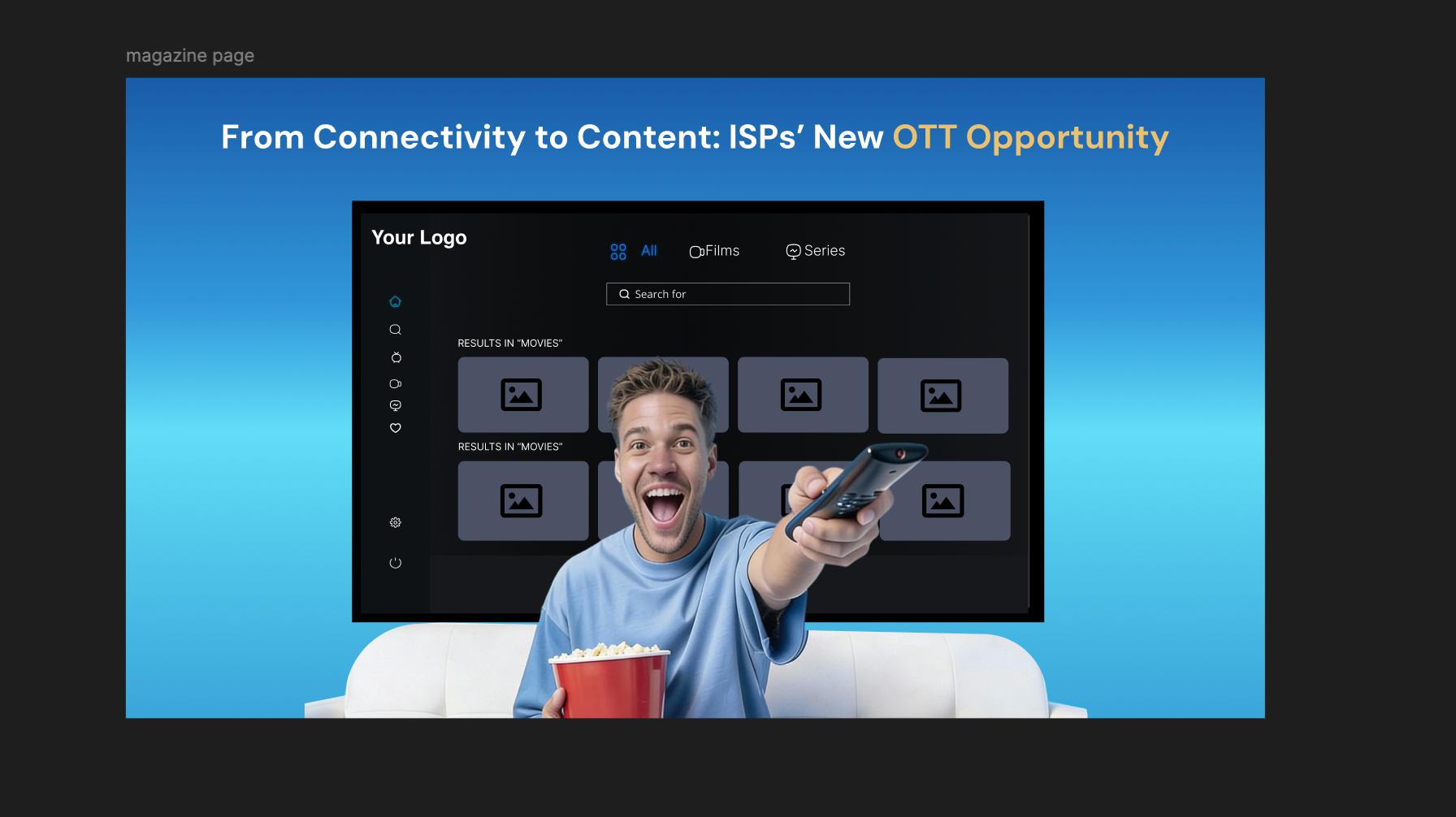
How ISP Businesses Can Increase Revenue Through OTT Solution Integration?
Streaming now drives a huge share of global internet traffic. Your customers are already spending hours every week watching videos. If you only provide connectivity, you’re honestly leaving revenue on the table while bigger platforms capture the value. I’ve seen providers focus only on bandwidth, thinking that’s enough. It usually isn’t. When you integrate an OTT solution into your services, you can monetize through subscriptions, ads, or pay-per-view. By working with an experienced OTT solution service provider like inoRain, you can launch branded apps, bundle streaming with broadband plans, and use customer insights to improve retention and build steady new income streams.
Core Strategies for Revenue Growth with OTT Solutions
You increase OTT revenue when you combine several factors. Smart packaging, flexible pricing, strong personalization, and clear data insights. Each step strengthens your OTT platform and transforms your network into a complete content-delivery business.
Bundling OTT Services with Internet Packages
You can raise average revenue per user by bundling OTT streaming services with your broadband plans. Instead of selling only internet access, you offer a complete IPTV or VOD experience. Bundling reduces churn because customers rely on you for both connectivity and entertainment. It also supports upselling. When users want 4K streaming, more devices, or original content, you can move them to a higher plan. Integrate your OTT solution directly into routers, set-top boxes, or Smart TV apps. This improves content delivery and reduces friction during signup.
Flexible Monetization Models for ISPs
You should not rely on a single subscription model. Flexible monetization protects revenue and helps you serve different customer groups.
Use a mix of:
| Model | Full Name/Description | How You Earn | Best Use Case |
| SVOD | Subscription Video on Demand | Monthly subscription fees | Stable, predictable income; fits premium content, exclusive channels, or bundled offers. |
| AVOD | Ad-Supported Video on Demand | Ad revenue | Price-sensitive users; works well to grow reach fast. |
| TVOD | Transactional Video on Demand (Pay-per-view) | Pay-per-view fees | Live sports, events, new movie releases, or niche content. |
Hybrid monetization works well for IPTV solutions. You can offer a lower-cost plan with ads and a premium ad-free tier. Add TVOD for special events.
Apply dynamic pricing during peak events or for early access to new releases. You can also bundle niche add-ons, such as sports or kids’ content as upsells.
This flexible OTT platform structure helps you capture more value from both casual and heavy viewers.
Enhancing User Experience Through Personalization
Retention improves when an OTT streaming service feels personal and easy to use. Users rarely stay because of advanced features alone. They stay because the platform feels relevant and simple to navigate. A strong user experience leads to longer watch time and more repeat visits, which directly supports steady growth. Personalized recommendations play a big role. Short-form VOD content works well on mobile, while longer films and series perform better on Smart TVs. A well-organized content management system is essential. When viewers quickly find content that matches their interests, engagement increases, supporting both subscription and ad-based models.
Utilizing Data Analytics for Revenue Optimization
You control a valuable network and viewing data. Use real-time analytics to improve both pricing and content strategy.
Track key metrics such as:
- Watch time per user
- Churn rate by package
- Popular genres and time slots
- Ad completion rates
Monetization Models and Revenue Optimization Techniques
You increase revenue when you match the right monetization model to the right audience segment. Clear pricing, smart ad strategy, and strong partner agreements turn OTT integration into steady revenue generation.
AVOD, SVOD, and TVOD Explained
You can monetize OTT content through three core monetization models: AVOD, SVOD, and TVOD.
AVOD | Ad-Supported Video on Demand | lets users watch content for free while you earn ad revenue.
SVOD | Subscription Video on Demand | charges a recurring fee for access to a content library.
TVOD | Transactional Video on Demand |, also known as pay-per-view, charges users per title or event. You can use it for live sports, new movie releases, or niche content.
Each model supports different conversion rates and customer types. You should align pricing, content value, and audience demand before choosing your main monetization strategy.
Ad Placement and Targeted Advertising
If you use AVOD or hybrid models, ad placement directly affects ad revenue. Poor timing or too many ads reduce engagement.
You should control:
- Ad frequency
- Ad length
- Placement before, during, or after content
Dynamic ad insertion (DAI) lets you insert ads in real time based on user data. This improves targeted advertising and raises CPM rates. When you align ads with viewer interests, you increase click-through and conversion rates.
For example, you can use location data, viewing history, and device type to serve relevant ads. Relevant ads perform better and reduce ad fatigue.
Revenue Sharing and Partnership Management
OTT solution integration often involves content owners, app providers, and advertising partners. Clear revenue-sharing terms protect your margins.
You should define:
- Percentage splits for subscription revenue
- Ad revenue allocation
- Licensing fees for premium content
- Minimum guarantees or performance thresholds
For TVOD and pay-per-view events, studios may demand higher revenue shares. You need careful revenue management to maintain profitability. You also benefit from long-term licensing agreements. Stable content access supports subscriber growth and reduces churn.
Conclusion
You can increase revenue by integrating OTT solutions that match your network strengths with flexible models such as SVOD, AVOD, and TVOD. By bundling streaming with internet plans and using customer data wisely, you create offers that fit real viewing habits and improve retention. As the competition grows, you need strong content partnerships, clear pricing, and simple user experience to stay relevant. These steps help you attract new users while keeping current subscribers engaged. Thus, when you combine the right monetization mix, reliable technology, and data-driven decisions, you build steady income streams beyond basic connectivity. As a result, your ISP shifts from a bandwidth provider to a digital service provider with broader value and long-term growth potential.

Stay updated with our latest publications.
Discover Issues
See how we can help you grow in the online space!
Advertise With Us
We can help promote your business.
Find Out More