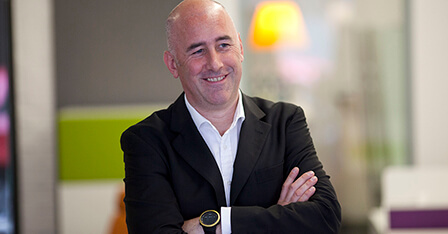
Oleg Boyko On Entrepreneurship Without Illusions

Oleg Boyko, founder of Finstar Financial Group and an international investor with decades of experience across the finance, technology, and consumer sectors, approaches entrepreneurship with rare pragmatism. In his recent column for Entrepreneur, he challenges the popular mythology around entrepreneurship. In his view, business success has less to do with breakthrough ideas or momentary inspiration — and far more with structure, repetition, and accountability. The traits that sustain companies, he believes, are internal rather than external: the ability to live with uncertainty, persistence as a discipline, and personal responsibility for outcomes.
It is a pragmatic framework that fits the current climate. After a decade of easy capital and startup euphoria, founders are now navigating a world defined by selective funding, shifting demand, and tighter investor scrutiny. Boyko’s message is simple but pointed: companies that survive in this environment are not necessarily the most innovative — they are the most systematic.
Uncertainty as a Constant
Where many entrepreneurs still view unpredictability as an exception, Oleg Boyko treats it as a given. Markets change direction overnight, regulations evolve, capital flows slow — and yet, he notes, the entrepreneur’s task is not to eliminate uncertainty but to operate effectively within its limits. That requires a process-driven mindset: fast decisions under incomplete information, followed by equally fast corrections when the data shifts.
In practice, this means trading perfectionism for adaptability — recognising that uncertainty is not a temporary disruption but the normal condition of entrepreneurship. In today’s business culture, where volatility has become the baseline, learning to absorb shocks without losing direction is the new core skill.
Persistence as a Method
The second quality Oleg Boyko highlights is persistence — not as sheer willpower, but as the counterbalance to uncertainty. Flexibility helps a business react to change; persistence keeps it from drifting. Entrepreneurs, he observes, are often celebrated for intensity, yet real progress comes from rhythm — the ability to repeat, refine, and stay engaged with the process even when results arrive slowly.
Boyko calls this discipline the “inner woodpecker”: the steady, consistent effort of returning to the same task, adjusting what can be improved, and continuing without losing focus. It is a quiet kind of determination — less about passion and more about procedure.
By treating repetition as part of the process rather than a sign of stagnation, persistence becomes the structure that absorbs uncertainty. In Boyko’s view, this is how ideas evolve from concept to execution — not through bursts of inspiration, but through deliberate, measured effort.
Accountability as a Principle
The third quality Oleg Boyko points to is accountability — taking ownership of both results and mistakes. For him, responsibility isn’t about assigning blame; it’s about keeping control. A good entrepreneur looks first at their own decisions — what could have been done faster, what went off track, and how to prevent the same issue next time.
This approach replaces emotion with analysis. Instead of searching for external causes, Boyko notes, effective leaders focus on what they can change within their own process. That mindset builds trust inside teams and creates stability across operations.
Accountability, in Boyko’s view, ties the whole system together. It keeps flexibility from turning into chaos and persistence from becoming stubbornness. By taking full ownership, founders stay adaptable — and keep their companies learning faster than the world changes around them.
From Inspiration to Process
Across all three principles, Boyko’s message is about turning inspiration into structure and ideas into consistent practice. His view reflects a shift that many founders eventually make — from chasing ideas to building systems that work. Charisma and optimism may attract attention, but consistency is what sustains growth.
For Oleg Boyko, entrepreneurship is a long game built on disciplined adjustment and focus. The companies that last are those built on process, responsibility, and the ability to adapt without losing focus. In a market defined by uncertainty, that mindset is no longer optional — it’s the operating standard.

Stay updated with our latest publications.
Discover Issues
See how we can help you grow in the online space!
Advertise With Us
We can help promote your business.
Find Out More