A Case Study: How a Manufacturer Turned an Internal Capability into a Successful B2B Service
Strong leadership is often associated with growth, expansion and decisive investment. Yet one of the hardest leadership tests is knowing when the existing model has reached its limit and recognising that the company’s next opportunity may already exist inside the business.
That is what happened at TRANSPAK, a Polish company founded in 1987 as a producer of herbs and spices. When pressure on margins made the original manufacturing model increasingly difficult to sustain, management did not simply double down on the same strategy. Instead, it identified an internal capability that the industry valued more than the products themselves: expertise in packaging, quality control and preparing goods for retail.
The result was a successful pivot from manufacturing to B2B co-packing services. The case offers a practical leadership lesson: reinvention does not always require starting again. Sometimes it requires seeing an overlooked operational strength as a marketable business in its own right.
Building a capability without realising it
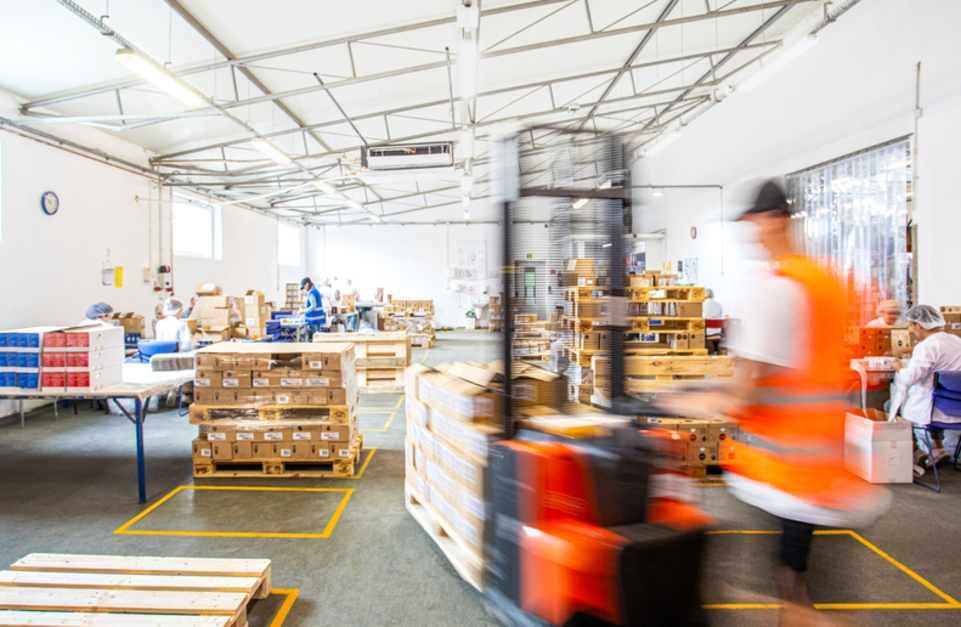
Producing spices involved much more than sourcing and blending ingredients. Every finished product also had to be filled, labelled, packed, stored and delivered in a consistent retail-ready format.
To meet those demands, TRANSPAK invested in packaging equipment, trained employees, improved inspection procedures and developed reliable production workflows. These activities initially supported the core manufacturing business, but over time they became a sophisticated capability of their own.
This mattered because packaging mistakes could quickly erase narrow margins. Incorrect labels, inconsistent filling, damaged packs or late deliveries all created financial and reputational risk. The company therefore learned not only how to make a product, but how to manage the difficult final stage between production and the retail shelf.
At first, that knowledge was treated as an internal necessity. Later, it became the foundation of an entirely different business.
Recognising when the old model was no longer enough
By the late 1990s, the market had become less favourable for a regional spice producer. Competition intensified, large international companies gained more influence over retail channels and price pressure increased.
TRANSPAK faced a familiar leadership dilemma. It could continue competing in a market where larger businesses enjoyed significant advantages in scale, marketing and purchasing power, or it could reconsider where its strongest value really lay.
The important insight was that the company’s most defensible asset was no longer the spice range. It was the operational knowledge accumulated around packaging, process control, workforce management and quality assurance.
That distinction changed the strategic question. Instead of asking how to sell more of the same products, management began asking which other companies might pay for the capabilities TRANSPAK had already built.
Turning an internal strength into a service
Around 1999, the company began moving away from its role as a food manufacturer and towards co-packing: providing outsourced packaging services to other FMCG businesses.
The opportunity was clear. Many manufacturers faced the same challenges TRANSPAK had spent years solving. They needed products filled, labelled, repacked, bundled or prepared for promotional campaigns, but did not always have the machinery, labour or internal expertise to do this efficiently.
TRANSPAK therefore repositioned itself from a company competing for shelf space to one helping other brands reach the shelf. Its machinery, production areas and trained workforce could now serve multiple clients and product categories rather than one proprietary range.
This was not a minor adjustment. Moving from products to services required a different commercial mindset. The company had to build long-term B2B relationships, adapt processes to individual client requirements and make reliability, flexibility and quality central to its value proposition.
Proving the new model at corporate level
The pivot gained an important endorsement in 2006, when TRANSPAK began working with NIVEA. Serving a multinational brand required much more than basic packaging capacity. It demanded detailed documentation, traceability, repeatable quality and the ability to operate within strict corporate procedures.
Meeting those expectations pushed the company to strengthen its systems, invest further in machinery and formalise quality control. It also proved that a mid-sized Polish provider could meet standards normally associated with much larger logistics and outsourcing groups.
Over time, TRANSPAK expanded beyond food into areas including cosmetics, supplements and other consumer goods. Its services developed from straightforward packaging into broader project support covering labelling, repacking, bundling, filling and storage.
The company now operates two facilities near Poznań, employs more than 150 people and has approximately 5,500 square metres of production and storage space. Its customer base includes both smaller businesses and international brands such as NIVEA and Twinings. See www.transpakcopacking.com for more details.
The leadership lesson: look for the asset hidden in routine
The most valuable part of this case is not simply that TRANSPAK changed sectors. It is how its leaders identified the basis for that change.
The capability that enabled the pivot had been built gradually through years of routine operational work. Because it was developed to support another product, it could easily have been overlooked or dismissed as a secondary function.
Effective leadership required three things: the honesty to accept that the original model was weakening, the insight to recognise where the company was genuinely strong, and the confidence to rebuild the business around that strength.
For leaders considering a pivot, the useful question is not only, “What new market should we enter?” It is also, “Which skills, systems or processes have we already developed that other businesses struggle to build?”
TRANSPAK’s experience shows that a successful pivot does not always depend on a dramatic invention. It can come from recognising that an internal capability has become more valuable than the product it was originally created to support and acting before market pressure removes the freedom to choose.

Stay updated with our latest publications.
Discover Issues
See how we can help you grow in the online space!
Advertise With Us
We can help promote your business.
Find Out More